Interview: Richie Hofmann
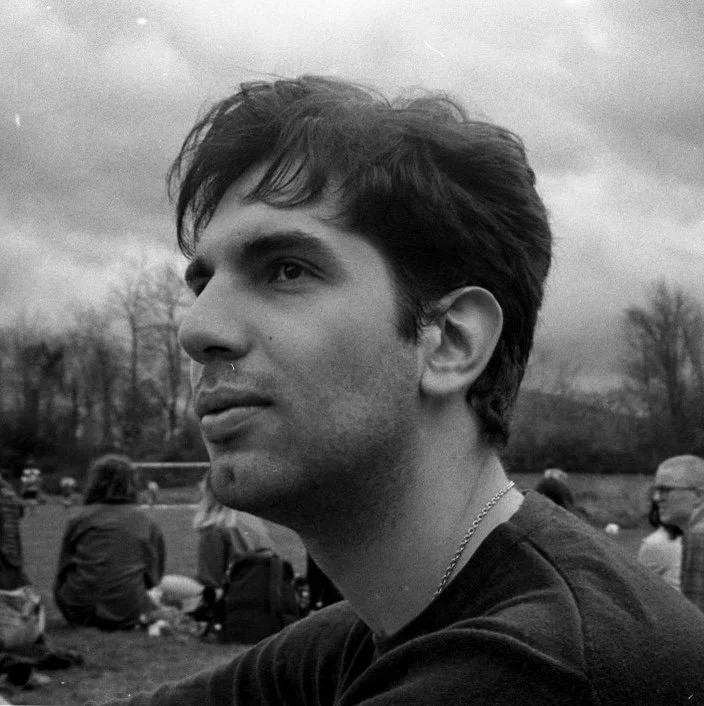
Earlier this year, I had the amazing opportunity to talk over the phone with the incredible Richie Hofmann. I first discovered Hofmann´s work over two years ago during a quest to find contemporary poets interested in desire. At the time, erotics in poetry had taken over my mind—I had been reading lots of Pablo Neruda, Frank O´Hara, Emily Dickinson—and I was interested in seeing how the way we think and write about desire has changed over time. I soon came across some of Hofmann´s poems online, which led me to purchase his latest book A Hundred Lovers as well as his debut collection of poems Second Empire. (A third book, The Bronze Arms, is forthcoming from Alfred A. Knopf in February 2026.) I was not only mesmerized by the strong and complex emotions that live in his images and deceptively straightforward language, but also with the way his poems are incredibly fresh and of-the-moment while deeply engaging with art, history, the classical which makes them feel transcendent of time, even when describing a single moment.
Ever since, I have been a huge reader and fan of his work, so I was overjoyed when he agreed to talk with me late last year. Our conversation was among the best I have ever had with a writer. He not only gave the most beautiful answers to the questions I prepared for him, but we talked about the MFA, teaching, our favorite poets, life as a writer, and he asked questions about my own writing.
The following is an excerpt of this conversation, and I am honored to share it, as well as Hofmann´s genius, with others.
Gerardo Azpiri Iglesias: I noticed that in the description of my copy of A Hundred Lovers it says that you were inspired by French autofiction. Which authors served as inspiration for the writing of this book? What are the qualities of autofiction that draw you towards writing it?
Richie Hoffman: It's a somewhat fraught question because everyone has opinions about it all of a sudden, but I think for me the author that most influenced me was Hervé Guibert. I became very drawn to his fictional works that resembled diary entries that had a very immediate intensity of emotional expression but which also felt highly shaped and artificial at the same time. I mean, they're not diaries, they were written to be consumed, but they use the artifice of a diary. I think that what I learned from Guibert was this desire to be sharper and to allow more into my work—I love how ugly his work is. I love how unafraid he is to explore not just the darker elements of the world but of himself as a kind of constructed self on the page. That felt like a fertile direction for me at the time as I was discovering his work. You know, I had written one book of poems and I had gone to the MFA and I had written a second book of poems—a lot of them were formal poems, a lot of them employed rhyme, one of my favorite tools to use as I was being trained, and Guibert offered something different. He offered something that had all of the intensity and formal power that I loved about poetry, but his work also felt dashed off and off-hand, and that was something I wanted to experiment with in my work.
GA: I can definitely see the tension between darker, uglier and the beautiful in your work, as well as the tension between form and the “off-handedness” you just described. Can I ask, what work by Guibert felt the most resonant to you?
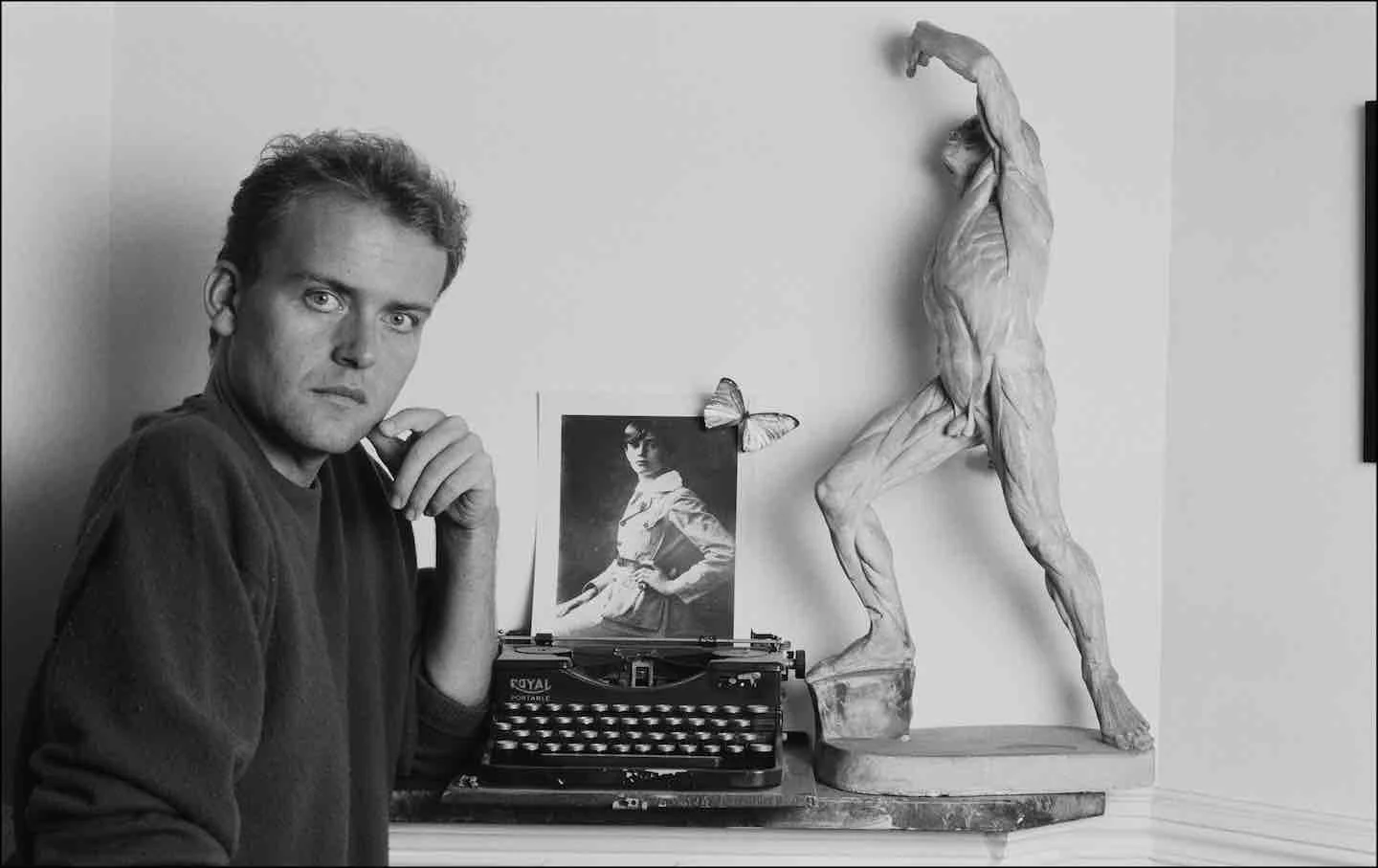
Hervé Guibert
RH: Probably the one that felt most important to me was Mausoleum of Lovers. It was published posthumously— it is diary entries from the late eighties or early nineties, it's very late work. They are very short, little prose fragments, some of them are just a sentence or two long. They have that kind of fragmentary feeling. In a way they felt shaped like poems already, so that probably made the project easier for me—to say how they influenced my own work— because they were very short fragments anchored by one principal image or moment, and I think that naturally appealed to me as a poet. That was a kind of entry-way, then I started getting into his other work. Mes Parents and his writing on photography is really interesting to me. And I have to say the photographs themselves, I mean he´s an astonishing photographer, and his photos share qualities of his work that I was really drawn to, that kind of sensitive erotic immediacy, and also this undercurrent of decay.
GA: I have read L’image Fantôme and seen his photographs, and I can totally see your work being in conversation with the way he thought of the erotic image— grotesque but very beautiful and powerful.
RH: Yes, and highly-shaped. I really love the shape his work makes on the page. You know, I don't feel I have exhausted Guibert. I am actually working on a new book… I've realized I had done all this copying from him and had all of this interest in his formal techniques, but I hadn´t yet written a poem that spoke to his work very directly, and so I started a new poetic sequence that I think will be a part of a later book that actually contemplates him and his life, his death and his art.
GA: That sounds incredible, I look forward to reading that.
RH: Yeah, this is a work in progress, who knows when it’ll come together. But I am not finished with Guibert. I learned a lot from him as I was moving into this new poetic direction but now I want to engage more directly with his writing and photography in my own poems.
GA: I wonder if you approach writing with all these elements and techniques differently when there is an explicit persona in the poem? I am thinking of your poem “Dolphin” where you´ve chosen Hermias of Iasos as a speaker, or in “Mummified Bird” where it is the Pharaoh´s bird who´s speaking. Do you add the autobiographical element to these personas, or do you approach it as a step-back to explore the subjects of darkness, eros, etc. through a pair of eyes remote from yours?
RH: It´s a brilliant question. As a writer, I think of them as a stepping back, or a habitation of some other consciousness, however fictional or impossible to get at. But the crazy thing about poems in persona is that they very often end up feeling closest to myself. You really can´t become yourself until you have a mask on. I feel that in the two poems that you mentioned. Obviously I don't have a ton imaginatively in common with these figures, but they did help me get closer to emotions I wanted to explore to experiences I wanted to explore. The mummified bird is one of the uglier speakers in the book, he is completely consumed with desire and he's quite callous about everyone else, and I wanted to explore that, and that figure of the bird helped. Also ancient Egyptian milieu gave me a structure for higher thinking of a particular kind of deathly beauty, a kind of eternal connection that is just inscribed in the aesthetics of ancient Egypt.
I think for “Dolphin” too… I'm trying to think of the origin of that poem because it's quite unlike anything I'd ever written. For one, it's exceedingly long for me. Most people´s short poems are that length but for me that was a really long poem. I think I had a desire to write a poem that told a story, and that in part was because I wanted to get away from that Guibert idea of the single image as the weight in the poem or the single moment of lyric utterance. I wanted something that felt more sustained, more dynamic and that moved through time. I don´t know where I first came across the story of the boy with the dolphin, it is not a story I made up but one I adapted from several ancient sources. There´s some coin reference for a boy and a dolphin, and all kinds of legends and stories have cropped up about it and I thought it was so strange and so beautiful. I guess the question I had was: what can I add to this story? I wanted to take something that felt allegorical or mythological and make it very contemporary and psychological. The more I wrote into that poem the more I realized I was probably myself dealing with questions about desire and forbidden desire and how vulnerable we are in the hands of a lover.
GA: That´s a wonderful answer…and this is a more recent poem, correct?
RH: Yes, that´s not in A Hundred Lovers, that's in my next book.
GA: Do you think now you´re trying to look at desire more through a narrative and longer form rather than the sonnets in this book… you know snippets of desire, or looking through the cracked door to find a great moment of erotism— Are you leaning more towards exploring the narrative and the psychological side of speakers in longer form?
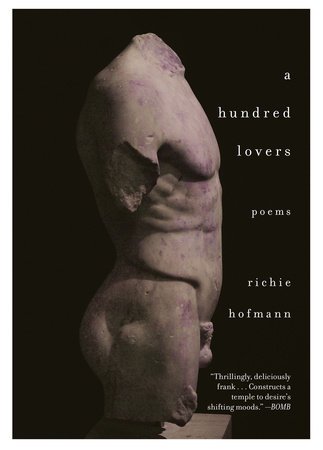
RH: I do, I think as a formal imperative I had to push myself to write longer poems. I didn't want to fall into the rhythm of A Hundred Lovers—which I thought was very beautiful and worked in that book, I´m not ashamed of it, but I knew that if I wanted to grow I had to change. One area I knew I could work on was the length of poems. Because the poems were getting longer in my drafts, I knew I could also experiment with how they understood and deployed time. So I really steered clear of poems that felt fastened to a single moment, I wanted the erotics to be expressed in a more nebulous and fluid understanding of time. A lot of my new poems don't revolve around a single moment like a lot of the poems in A Hundred Lovers do, but they take on a broader time scale. That isn´t to say they´re all narrative—I still think Dolphin stands out in that manuscript, but I wanted them to do more, to be able to move forward and back through time, and that led me to a new subject for me, which is childhood and coming of age. I think a lot of people´s first books are about childhood and family but for whatever reason I kind of skipped that. I have two books that are pretty much in the present tense and so now my third book is going to explore what it means to come into oneself as a desiring person, as a person with a body.
GA: I´d never stopped to think about that “childhood phase” of the poet, but I am excited you´re going in that direction, I can't wait to read the book.
RH: Yes, it should come out in maybe two years.
GA: So, do you think it is these questions of desire and time that are informing the form of the poems?
RH: I would say they inform one another. I think form is something a poet can really control, so there's a way in which putting pressure on myself to experiment with writing slightly longer poems has also changed what the poems can hold and what they can be about, and that was kind of a conscious formal choice.
GA: True.
RH: I don´t know, it's hard to say… I feel like my subjects are always the same, but by putting different formal pressures on, you can get different elements out of them or you can rub them against different contours of the same idea.
GA: Earlier, you were talking about exploring being a “desiring person” in your work— I really love all the erotic moments in your books, they´re beautiful and ecstatic. But there are also a lot of graphic moments and explicit descriptions in your poems, they´re done very beautifully and the images are complicated and profound, making the poems stay in the realm of beauty, and when they´re not beautiful they reside in the realm of poetic depth. Lately, I´ve been hearing several discussions about the fine line between the erotic image and the pornographic…Where you draw that distinction, or how you approach writing about sex without crossing the line that divides the two?
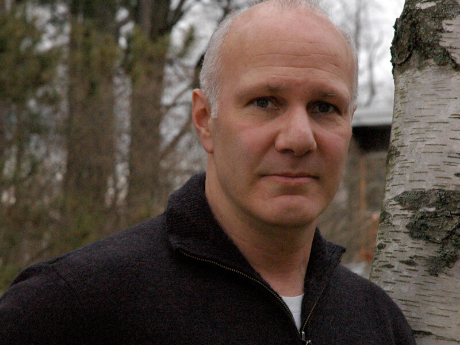
Henri Cole
RH: It´s a beautiful question. I can't say I ever considered such a line consciously, or even know what the line would look like. At the end of the day, they´re poems. I think about what pornography is for and I don't know if poems can achieve quite the same end. But it's an interesting question. I have to answer from a place of language: I think on some level I was very interested in writing poems that could have different kinds of language in them, that could have something that might be seen as vulgar in very close proximity to something seen as “capital B” beautiful, or high-minded, or culturally significant. Henri Cole is one of my hero poets and I learned a lot about the commingling of registers of language from his poetry. That´s part of the challenge I give myself. But I never in the process feared, or worried, or wondered even, if I was writing something pornographic. As a poet I am creating an aesthetic world. That aesthetic world includes rooms and apartments and shirts and men´s bodies and art and ruins and trees and wine and sunlight. They´re all part of the experience I want to create for the reader, but I never thought about pornography and its relationship to eros in the poems— It all just feels part of the same shaped world. Does that make sense?
GA: It does! And I did not mean to imply that your work reads as pornography, on the contrary…
RH: No, no! It is a question of degree, it's really interesting. It's hard to have control over these things when your work is in the world. I think there's a reader who might read my work and think oh my gosh, this is shocking and very naked! And you might have another reader read the same poems and say these are so prudish and buttoned-up! I´ve had both responses. This is not only true for subject matter but also true of how you deploy your form. I think some people look at the poems and say these are so messy and off-hand, there´s no craft here! And someone else might look at the same poems and think these are so hemmed-in and artificial, there´s no authentic feeling there, but to me it´s the same poem. It´s hard to control how it will be viewed. What matters to me is the entire book creating an aesthetic world. Is there a texture, is there an atmosphere in the book that the reader wants to enter and linger in?
GA: That's beautiful—when I read the book I definitely feel like I have entered a world of shirts, bodies, ruins… It feels very classical in a way, and of course, you have the tension with the vulgar language, the graphic images. It's very exquisite.
RH: Thank you.
GA: I´m interested in that tension between the vulgar and the “capital B” beautiful, how they work together. Can you talk more about how you approached it in writing and building your aesthetic?
RH: Hm, it’s hard to answer in the abstract. I would say it comes from constant experimentation, from trying to challenge myself to let more of that experience into the poems, and to challenge myself to use juxtaposition as a predominant technique. A lot of the poems are in very simple sentences and one of the ways I learned to create tension in this book was juxtaposing two or three sentences in a row that very quickly felt like they were shifting in tone or register as a way to create that excitement, because there are not a lot of formal fireworks in this book, and the subject matter is quite languid and consistent throughout— that was something I really wanted, for it to feel like it was one wind blowing through, I didn't want there to be a lot of variety, but I wanted it to feel all of a piece. So one way to hold the reader's interest I learned to do through juxtaposition, and that's both tones and registers but also sentence by sentence.
GA: This feels true to the core of the poems— I´m looking at your poem “Bottom's Dream” where you´ve written “My death will be a thin fabric he kisses me through” and you have other poems like “Spring Wedding” where there´s a beautiful moment of intimacy that feels so safe and grounded and then ends with “One of us will get cancer. All of our parents will die.” Or even the poem Breed Me that ends with “I had a pain inside me and I wanted you to deepen it.” What is the relationship between eros and death or eros and loss is in your poems?
RH: I think they always go together. With every love there´s an animated fear of losing it, even in the moment of having it. That's something I was interested in exploring in this book. There are several poems in the book where the speaker is with his lover and is already contemplating what losing him will be like: “When will I see him again? I asked when I was with him.” There´s this desire to make everything permanent. That's one of the reasons I am drawn to art and the classics in my poetry, because those are kind of unstable figures for permanence and loss is always part of the desire. The poems I´m most drawn to in the world are poems that can´t be neatly categorized emotionally. My favorite definition of poetry comes from Auden who said that “poetry is the clear expression of mixed feelings.” There can be two or more emotions happening at the same time and the poem is the space where they get to colinger and I guess ultimately lead to some… if not a kind of clarity or resolution then some kind of acceptance of the coexistence of desire and pain, of love and loss, of safety and threat—we are constantly juggling those forces…
They just go together! I think of Sappho, she describes eros as that bittersweet implacable creature, right? She used the word bittersweet to describe desire 28 hundred years ago and I think desire still tastes exactly the same.
GA: True, and who could say it better than Sappho!
RH: None of us, none of us!
GA: A Hundred Lovers contains, for the most part, sonnets— the form of the love poem, the erotic poem. However, I´ve come to find that when we think of sonnets we usually have more traditional expectations of it. I am always very surprised when I find queer, or some sort of rebellious desire, in a sonnet, particularly when they´re not written in meter which speaks to this rebellious instinct. What draws you to the sonnet?
RH: Well, the sonnet is kind of the perfect form. There's a reason why we keep coming back to it century after century in so many languages and literary traditions. It is about as wide as it is tall, it creates this perfect square on the page, you can kind of understand the poem in its simultaneity as it unfolds because you don't have to turn the page, you can see the whole thing, you know where you are in the sonnet. There´s this imperative to turn—the volta in the traditional sonnet—so you know that swirls and fractions are going to take place, but they also happen at a choreographed time. The sonnet itself is a very interesting vessel of tension between choreography and surprise, between timing and swerving. I just love sonnets, they´re a huge part of my teaching as well.
Maybe you´re right that there is something a bit rebellious about a sonnet that doesn´t follow all of the rules, especially one that has queerness at its heart. But then I reread Shakespeare and the poems are so queer! The poems are so strange and unconventional in their understanding of what desire is and looks like and feels like. And then I reread John Donne—his Holy Sonnets which you´d imagine are quite pious and stale, but they're full of violence and powerful feeling and desire. So there's a way in which I feel that these transgressive or non-normative attitudes are inscribed in the sonnet all the way back to Petrarch—maybe it's not so untrodden.
GA: I see.
RH: It's an amazing thing. I taught Shakespeare Sonnets a couple of years ago—I taught a seminar at Stanford called “Poetry and Desire”—it was just four authors. We did Sappho, Shakespeare, Cavafy and Lorca.
GA: Wow! I would've killed to take that class.
RH: It was such a wonderful experience! In part because there were only four texts, we only read those four authors and so we got to read them very eagerly. The Shakespeare was such a surprise to my students because they had one view of what his poems were supposed to mean from maybe a single poem they´d read in an anthology or in a survey of British literature, but reading all of the sonnets together—they actually are very bizarre, very queer, very difficult to pin down. They have a very kind of shifting and enticing ideologies that even I hadn't been expecting when I sat down to reread them.
I think one of my jobs as a teacher is to kind of reacquaint my students with the strangeness of what we call traditional poetry. I have a lot of really brilliant students, and they come to me saying “I hate the canon, it represents a certain kind of orthodoxy, a certain kind of maleness or whiteness or straightness, privilege that I just can't get on board with” and of course, I understand where they´re coming from and I´m sympathetic to it, but I do feel that one of my jobs as someone who teaches the history of poetry and really values so many of those old, dead poets, is to show my students just how strange and unconventional those quote-on-quote canonical writers can be.
In a U.S.-American context, Whitman and Dickinson are thought of as the father and mother of American poetry, but their lives and their works are nothing about perfect American subjecthood. They´re massively queer, strange, unconventional figures, and their work was completely boundary-breaking in every way. So it's easy to dismiss some of these traditional writers but I often find that they´re way weirder than I would´ve thought before I really dig into them.
GA: Earlier you mentioned wanting to work on longer forms—yet I love the way you engage with tradition and the choreograph of the sonnet. Have you considered writing in a longer, but still choreographed form? Will we see, for instance, an all-consuming Richie Hoffman sestina one day?
RH: I haven´t worked on a sestina yet, that sounds really daunting. But I´d be interested to try, I think it would be hard to get it right. Forms are not merely decorative, they are highly functional. What I learned from form is that certain kind of shapes on the page, certain kinds of lengths of lines, certain kinds of musical attributes do different things for a poem. As I try to stretch myself—I mean literally stretch the poems—into a slightly longer space, I can't rely on the choreography of the sonnet to get the job done. I have to learn a new way of using poetry, of using language to make exciting things happen for myself. There might not be one turn in the poem, but the turn might happen, the fraction might happen in several places. I attempted that in a poem like “Breed Me” where the subject keeps shifting slightly, even though we feel we are in one moment of consciousness or one scene, the language that is in the statement shifts several times before the end. So I am learning how to do new things and learning how to make things happen in a new shape.
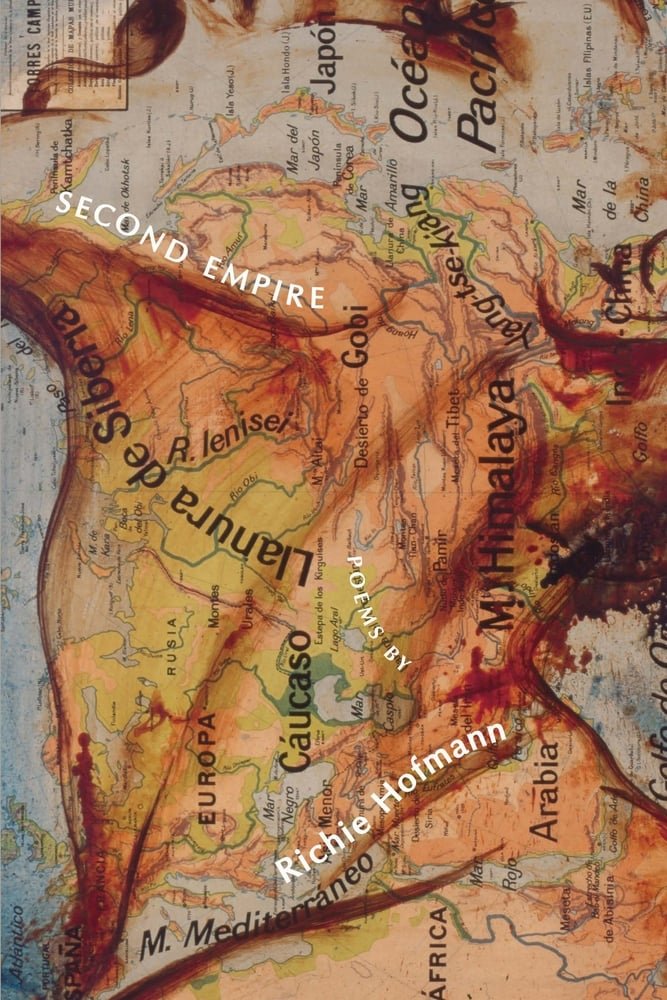
Richie Hofmann is the author of two books of poems, A Hundred Lovers (Alfred A. Knopf, 2022) and Second Empire (Alice James Books, 2015). His poetry has appeared recently in The Paris Review, The New Yorker, Poetry, and The Yale Review, and he has been honored with the Ruth Lilly and Wallace Stegner fellowships. He teaches at the University of Chicago.