
Ishion Hutchinson was born in Port Antonio, Jamaica. He grew up scribbling in his notebook, without “any idea about genre or aspiration in mind,” he says. One day when he was fourteen or fifteen a teacher saw some of his scribbles and told him these were poems; he became more ambitious about them, and the vocation fell into place. He has published three collections of poetry: Far District, which won the PEN/Joyce Osterweil Award for Poetry, House of Lords and Commons, a “Miltonic graffiti,” according to Dan Chiasson, which won the National Book Critics Circle Award for Poetry, and his most recent book-length poem, School of Instructions, shortlisted for the T. S. Eliot Prize.
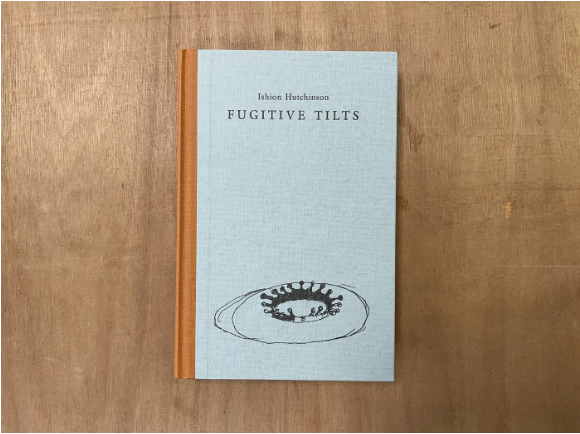
Earlier this year Hutchinson published his first essay collection, Fugitive Tilts (Farrar, Straus and Giroux, 2025). The essays, written over the course of a decade in different circumstances, are “like his poems—rangy, far-reaching, unguessable.” As a fiction student studying poetry in his class, I was eager to discuss with Hutchinson his experience tilting into prose writing. We met over Zoom one Monday afternoon in mid-November, and talked about his relationship with language, Jamaican music and the Romantic tradition, and aesthetic survival in an ongoing post-colonial world.
I. To Wander and Wonder
Sijing Yang: I’m curious about the process through which the essays come together as a collection. How different is it from making a collection of poetry?
Ishion Hutchinson: A good number of these essays were commissioned pieces or collaborations. Occasionally, an essay might begin the way a poem would for me, through, say, a memory, and I’ll write and see where it goes.
There's a conceptual framework that gives the book its shape: what kind of experience to create, across a linear continuum, but breaking out of it as well, building a sort of associative link that makes the thing feel whole, like a journey.
But it's only my first essay collection. The relationship is more or less superficial [to making a poetry collection]; there's a different tenor of intensity. So yes, the process through which the final thing came about doesn't quite resemble the process through which the book of poems evolves.
SY: You said in a previous interview that this book is a portrait of the young artist as a reader. I think that's a really good reading of this collection, and I wanted to talk about the voice of the writer, or painter, of the portrait.
There’s the precision and reticence that comes from the poet. There’s the calm, candid voice of the prose writer, and unlike the poet—because sometimes when I read a poem, I have to read a couple of times to understand what it’s trying to do; sometimes I never really understand it. But in your essays, the narrative clarity is always there, clear as a bell. And then, there’s the musician who knows everything about Jamaican popular music and folk music traditions like mento and tambu and shay-shay.
So, let me ask you now, where does the voice of the essays come from? Is it essentially from the poet?
IH: Essentially, yes. Because the poet as a reader might be one way of looking at it. The poet as a listener, the poet as an observer, which is just the poet, to not overcomplicate it.
SY: As a poet, do you feel that your relationship with language is different when you write prose?
IH: I think the essay form allows you an open-endedness that poetry is always sort of foreclosing. Not that poetry isn't about, like you said, entering and meandering, from different angles, a multi-experience of language—there're so many impressions happening simultaneously, and that’s how both an essay and a poem can be.
But there are certain ways that the essays force one to develop a thought and see it through. So, there's the sentence, and even when it’s coming at the thing—the idea, for example—obliquely, it still nonetheless is exploring that idea as up close as possible, and teasing it out. But the poem doesn't always stick to its idea-driven attempt. It actually wants to belie any confirmation, or staying within the bounds of what might have inspired it. The poem is constantly forcing the poet to think of ways to escape subjectivity. Whilst the prose might be a way of embracing subjectivity or a subject position in a full-on type of manner.
So yes, I love the essay and love reading them for that reason, to see how a writer thinks, how a writer is feeling all of the range of emotions. But really, it's an intellectual activity. It goes back to the old definition of the essay—to wander, right? To—and it's corny to make that pun—both wander and wonder. My accent will never really quite bring it out; I don't know if any accents will quite bring out the difference. But that small switch of vowel is really important, and it's contingent on each other, where the essay form is concerned, if you go back to Montaigne and other classic essay forms.
And I think with the poet there is, as usual—and this might be nauseating—a type of hypersensitivity that is poured into the work that makes it almost personal, even when it's not personal. And interestingly, poets would argue that the best poem, even at its most personal, works through a kind of impersonality.
So the difference is, you know, obvious in many different ways. Structural, formal, and language-based differences. But those are not always resolved, so I wouldn't try to make too harsh a distinction about the writing, even though the writing, as it materializes in prose, is markedly different—you do have the sentence, nonetheless, as the macro of the movement of words, and there's a difference in rhythm and tension and so on, that affects the movement, and thus makes the two things feel dramatically different.
SY: I love that distinction you made on subjectivity. In poetry, as you say, there’s the intention of escaping subjectivity—and it reminds me of something we talked about in class: how the individual experience is synthesized with the historical, the collective experience. And when writing prose, sometimes you want to, you have a chance to embrace that subjectivity. It makes me want to ask: how does the distinction impact the style, or the movement, as you were saying?
IH: That's a great question, Sijing. Well, whether writing prose or poetry, language remains just about the same. It's about the process through which language engenders something surprising and new in different genres.
With poetry—and here we are using this word, poetry, which refuses to be cornered to an easily understandable thing, and which is markedly different from poem or verse. So not because you write a poem, it is poetry—that’s not a given. Poetry can be in prose, in that, let's say, poetry is the experience of the sublime. It's being transcended and translated out of yourself, because you've encountered beauty that is so marvelous, that you marvel at it almost wordlessly. I love what the poet Emily Dickinson says, I know it is poetry, because it takes the top of my head off. And you can have that encounter and experience in prose. There are many, many great writers of prose who probably wouldn't give a poem the time of day, but within them, there is poetry, the sublime. For instance, when you cited something I had said about the book being a portrait…
SY: Portrait of the young artist as a reader.
IH: Well, clearly I'm gesturing at Joyce there. And Joyce, one could say, is one of the 20th-century super poets, whose masterpieces were all written in prose. I don't think anybody reads Joyce as a prose writer. There're certain writers you don't read, I don’t read that way. I don’t read Virginia Woolf as a prose writer, even though she's a master of prose. And, say, Edward P. Jones’s The Known World, or Toni Morrison. And I'm not saying that their writing is merely lyrical or poetic, you know, you can have lyrical writing as much as you would like; but I think as a poet, I'm able to recognize that these are great poets who happen to work in a form known as prose. And one might go about doing that in different ways. Say, J. M. Coetzee, his tone is always sober, very, very plain-spoken.
SY: And taut as a drum.
IH: Taut as a drum. Yah man! It's that tautness that is incredible about his work, that he's able to have that kind of reticence you'll find in great lyric poetry. V. S. Naipaul is a master of that, too.
So, whatever the style, the mode, you name it, one wants to see a writer taking language by its throat, and not easing up. We want language intensified. We want to experience it afresh, to make something new, or renew something old. It's very demanding and exacting.
At the end of the day, a poet writing prose isn't attempting to recast the prose as a poem—even though we have that weird thing called prose poem—but is experimenting with a new type of modality, hoping to discover, minutely, poetry within that mode, to catch it at a glimpse at times, whilst living, and doing the work of what any average prose writer does when she decides to write prose, and bending herself to what the demands might be.
SY: Would it be too over-the-top to say that the demands on prose writers is they have to make sense of everything?
IH: I agree. But I am at pains at times to make sense of the distinction, you know, in terms of form, which is where the evidence of the writing proves itself.
There’s probably one corner of heaven where there's no distinction between writers and poets and dramatists and painters and, I don't know, origami makers and so on, that they all are just incredible. But at the top of the door going into that little room, I think the label would be Poet, though.
SY: Yeah, that works for me. So what are some of the specific demands that you really love or hate about prose writing?
IH: As a reader, I love everything about it. As someone who happened to have written some, there are things about it that I don't like. Just the march of a sentence that has to mushroom into a paragraph that somehow is distilling a thought, or multiple thoughts, that must move in a coherent, logical manner, or at least, must arrive at some sort of coherence—that is extremely difficult. And I am in awe of prose writers who can write so cleanly, and those who don't have that quote-unquote clean prose structure, but nonetheless can deliver the astonishing coup de grâce of saying something exacting and direct.
So writing prose, it requires a kind of discipline and a kind of forbearance. You have to sit there and plug away, because, I guess words have to just grow and grow and accumulate.
SY: They do!
IH: And I'm speaking very, very superficially, in a way. So that part of it, I don't necessarily enjoy as a writer, but as a reader, I am in awe of how prose writers generate this volume, and can shape it into an experience for a reader that feels so thorough, as if they hadn't labored those many years, making those words come together and stand firmly next to each other.
So poets do that too, of course, but again, back to some of the stuff I said earlier, the specific demands, when one looks at both genres, are quite different. The difficulty of poetry is resolved within different poetics that come to the poet's rescue when she really, really works hard on a poem. The poem moves, horizontally and vertically, at the same time. So if it's not going well in one direction, hopefully the other direction is supplementing or taking the failure of what's not quite working, and shaping it, forcing the reader to see: No, pay attention! If you read it this way, then that's a totally different outcome.
A prose writer doesn't have that. It's only moving in one direction.
SY: Yeah. Sometimes when writing prose, and even if there aren’t any explicit constraints, really, I feel like I have to do things that I might not necessarily be interested in. And I suspect that poets get to write only what they're interested in. Like, they don't have to do a lot of housekeeping. They don’t have to fill in all the backstories, you know, create some sort of transition between the scenes. Those things are just labor, sometimes, if you look at it that way. Am I, like, completely wrong about it?
IH: I see the point, and I take it. I mean, there’s the clichéd way, or the familiar way, of thinking that the poet crystallizes this instantaneous movement, as if, all of a sudden, we have come through our senses in just a moment, in just a fragment, in just a phrase, right?
But can we determine how the poet came to write that phrase, came to bring that particular couple of words together? The journey that we might not see or have the evidence of, but I think the poet has undergone a lot in order to arrive there? A lot of labor, and labor is a great word, I think, happened to bring about that crystallization.
An example we might say is Marianne Moore's poetry. That wonderful dispiriting line: I, too, dislike it. But if you look at the early publication of that poem, it's a much longer poem; and not just the length, but the technicality, the exuberance, the proficiency of arrangement is all the way evident in that long version of the poem. But the poet at some point decided, no, that's not the poem, and chopped it away, and so we have now just this little nugget of a line. Could it even be possible for one to chop down The Sound and The Fury to just one essential paragraph?
So, yeah, writers, all of us, are laborers, and doing a lot to try and produce this moment, this compact thing. Even the biggest novel, one might argue, is compact, given the vastness of our language, or what could be made out of our language, and that they can really shape it into something that stands on its own.
II. “Great Things Begin in Small Rooms.”
SY: The essay, In My Room, is about your “place of fret,” a small room where you come daily to do the labor of writing. I love your description of this small room: “It's not a narrow room, but one that is short and sort of wide.” Short, like a lyrical poem, right?
IH: Yeah, pretty much.
SY: And wide—I guess all writers want to be wide, instead of narrow, just like a room does. This is one of my favorite essays in this collection. Were the essays in this collection written mostly in that room?
IH: Oh, thank you. That small room is the first room that I lived in in Ithaca. The desk that is described in that essay, it's the one that I am sitting at right now. I love that stillness I needed to write, whether it's poetry or prose.
But no, the essays were written all over many, many small rooms. I saw the other day a clip from Outkast, their acceptance speech after being inducted into the Rock & Roll Hall of Fame, and André 3000 said something that I concur with and believe to be true, that great things begin in small rooms.
And small rooms, you know, they're everywhere.
SY: In the talk about Lee “Scratch” Perry you said, about the Caribbean space: “there is a confluence or a flux of all these various traditions and cultures that are meeting in this one very small space,” and “so much of it is the emphasis on possibility, on the possibility of a better life.” I love that. Can you talk a little bit about this one very small space with the emphasis on possibility, where you grew up in the 90s? And how it enabled you to become a writer, how it shaped your writing

IH: Oh, thanks for that question. You know, an island is a small place. There's a great book by Jamaica Kincaid called A Small Place, which I absolutely love. It's a small place, and at any point, one might look out, and the land might come to some sort of a conclusion: you might see the end of the landscape where it trails off, but then the sea begins, and it’s infinite. That's a type of metaphysics as much as it is a physical reality.
Most Jamaicans are of African descent. The history of the arrival of peoples from different parts of the world is one of extreme brutality. So once you're aware of that position, of having been taken from a vast landscape to live in a small one, and only now to see that the vastness is the sea rather than the land, and perhaps across the sea, but invisible, unseen to you, is the landscape of your original home, you're in this metaphysical position of constantly yearning for what's over there across the sea, and voyaging towards it is impossible. Well, you could simply get on a plane and arrive somewhere, but you're arriving to what, really? The sea has cut us off from our origins. Exactly where in that vast land of Africa are you from?
Even if you're able to trace your heritage or lineage up to a point, it's always sort of general and diffused into West Africa, you know? That's, sure, geographically, certainly, a reality, but West Africa is a vast place. If we can reduce it to the Gold Coast, okay, that still is vast. You reduce it to a country on the Gold Coast, Ghana, that still is vast. And so on.
So island people in the Caribbean recognize both the connection and disconnection from one's roots, and the sea provides a bridge, but it’s a bridge that you have to imagine your way across. And imagination is extremely powerful and can be the important tool, if you like, that provides reconciliation, for one to both accept the position of being now a person who has to exist on this island, but who is from somewhere else, and be fine with it, right? But that doesn't remove the constant self-questioning about one’s heritage.
So Islandness is somewhat a liminal tuning fork between here, the present, and there, the past. But it's also not as reductive, or binary, as those two poles. It is also about a kind of eternity, because the hope and the wish to return, so-called, will always be there. And return means to go forward. It means to realize this dream, or this wish, to be home, in some future time. And I think the presence of the sea constantly reminds, or constantly reinforces, that desire.
And I just now talked through an idea that I'm at pains to make a point here, but Jamaicans, I believe, all have that similar feeling. They can express it very directly, or when they cannot, the music is there to do it, to articulate what cannot be articulated. Music has a language that preserves so much of the language lost, it is a mode of survival. Because the remnants of post-colonial history are so present, it takes a lot to overcome, and the kind of ways that Jamaican music has given us a language, an ideal of emancipation, is deeply anchored in people. And in particular, maybe we will talk a bit about that, the music that best holds this difficult dimension is the form called dub music, which is almost always devoid of lyrical expressions. It's more of the construct of the form, which is basically heavy bass and deep drum, music sort of spaced out and curated to bring one back into the on-the-sea journey across the Middle Passage. That darkness towards light, and the light turns out to be the island, the light of the island from which one then emerges to look for a home.
So, I think that, being dramatized over and over, is the entirety of Caribbean being and islandness. Our art, our music, and our writing, all of it recapitulated in a different pitch. And that's what gives our writing its unique feature, because it never is two steps away from that ineffable, transatlantic pain. But it somehow figures out a way to express it.
III. “But Not Enough.”
SY: You did this talk on dub music and Lee “Scratch” Perry in Switzerland, of all places! I remember what Nicole Krauss says about Switzerland in one of her short stories: they have the “snow that muffles and softens everything.” It's like the opposite of the Caribbean, in my mind.
IH: It really is.
SY: I really love that piece. Not least because it reads like contemporary fiction that pretends to be the transcript of a mysterious presentation, I think.
IH: Oh, thanks for seeing it that way…
SY: Actually, can I read this paragraph and then maybe we talk a little bit about how your work is influenced by dub and other traditions?
IH: Yes, let’s read it.
SY: So this was part of a conversation you had with Lorenzo Bernet in Zurich. You said:
In some places in Jamaica if you step outside, you’re confronted with a landscape with sugarcane growing on it, and sugarcane is the crop plant that the slaves were brought over from Africa for, or rather human beings were brought over as slaves, and forced to work in those plantations. So that plant is still there; it hasn’t gone anywhere. And so you say “hello”; then you walk out and you see sugarcane. There’s nothing extraordinary about that, but if one takes a little bit of time to think about those two presences, the self and the landscape, it is an immense psychic leap one has to make on a day-to-day basis to reconcile oneself to such ongoing visible reminders of ancestral trauma.
I love that. And the self and the landscape—were you gesturing at the Romantic tradition here? Wordsworth and stuff like that? It’s not exactly a gesture of love, is it?
IH: Oh, actually I revere and love that tradition. That tradition is part of the tradition of the Caribbean, you know? The Caribbean as a place is… no, we don't use terms like multiculturalism anymore. In fact, those terms wouldn't necessarily apply, they would be very partial; but such a term still is necessary to provide a framework of what the Caribbean is like.
But it’s fraught. Because the colonial legacies, whatever they might be, the canonical here, let's say, is reshaped in the Caribbean. Or, I would put it this way, it is creolized within the Caribbean imagination. So it’s not some sort of substitution of, say, daffodils for mango, or breadfruit, or something like that.
But I think the romanticism that I am gesturing at there is the romanticism tradition that really scared the hell out of conservative Europe and England, you know, we have to remember that. These poets and writers were rebels. Some of them were extremists, you know, a lot of them were abolitionist thinkers. I'm not saying that to excuse the tradition: it too is much a part of the ways in which British imperialism unfolded. Not discounting, by any means, how Britishness absorbed even the ones who were pushing against its imperial instincts, that in some ways, even the most militant, anti-imperial factions of them got co-opted. Romanticism got co-opted into a conservative Britishism. But I'm thinking more so of… Actually, let me speak more personally, just what I felt as a young person reading the Romantic poets. I felt moved. I felt that they were saying something vital, that I needed to hear about what it means to be alive, to be a person who is serious about individualism, collectivism, and responsible for shaping the world in beauty. That's their contention: beauty. So that aspect of it exists and it takes on a Caribbean pulse.
Everything that ends up in the Caribbean becomes Caribbeanized, you know. Reggae music wouldn't have existed without, say, American radio, the music that was played on Caribbean Station occasionally, which lots of early Jamaican musicians tried to imitate those sounds that eventually became authentically Jamaican.
But you see, that's the beauty of imitation. Once you try to imitate something, and you do it deliberately, certain unintentional results will come about. And because you have so much cultural capital to stand on just by yourself, by taking something that supposedly is from elsewhere or whatever, you're actually putting it through the filter of creative recreation, which is precisely what other so-called classical cultures did anyways, you know?
It's just that the history of the world has proven to be a botched, terrible thing, where ideas about how to maintain it were decided by some people, for some reason, that they should be at the top, to put it poorly. So, I think what the poet does is awaken the dormant, unthinking mind and imagination where the true unfolding of our world takes place, meaning that, not for shock value, a Caribbean poet might just say the truth about history in a poem. But it’s for the sake of conscience—what the Romantic poets were up to, troubling the conscience of their people. And that tradition continues in the Caribbean with incredible beauty.
SY: Because we need beauty to survive.
IH: Yes.
SY: I think this is going to be a cheesy question, but I'm gonna ask anyway. So, you had a conversation with Teju Cole, and you guys talked about the beauty and horror in the Caribbean field drenched in blood. I think he made a sort of outrageous but also truthful distinction there—he said, poets side with beauty, and prose writers, when possible, they side with horror. So in your essays I see both beauty and horror, and I can’t tell which one you’re siding with. Do you have an answer to this?
IH: Well, I hear Teju, and yes, I have an answer. It is that Yeatsian notion of “A terrible beauty is born,” you know?
Both a good prose writer and a good poet understand simultaneity. It's not that the poet, or the writer, is just looking for what's underneath, you know, a beautiful surface, and you dust it off, and you realize that, Oh, there's just some dirt under there, something bad. I think it's the writer's first duty to look, and look again. And that second take is always revelatory, and will show up what might not have been seen on first look.
SY: So you don't take sides.
IH: Well, if you're asking me specifically about something else, there are things that I side with unquestionably and resolutely. I think when it comes to writing, you side with the human. You side with what gives life value, and not trivialize it. And those things turn out to be things of beauty.
Keats's little poem about a thing of beauty, some people might find that passé or whatnot, but his world was undergoing so many changes. The Industrial Age was bearing down heavily on that period of England and the world. What was happening just across the sea, you know, there were slave revolts going on all over the Americas. And to what end? Greater liberty, right? And greater liberty could also include the freedom to choose what shirt you want to wear, because, you know, I love that blue, and I want to wear that blue today, because it's gonna make me look good—it could be as simple as that. Or, as simple as: this contract that was imposed on other human lives without those human beings wanting anything to do with it, it’s a terrible contract, and I want to rip it into two halves. I want to break it. And that, you know, the writer understanding the position as a writer is striving to be part of that fight, to undo that contract. So we're all in some ways ingathered towards that labor of freeing ourselves.
SY: Yes. Freeing ourselves from abstract authority. Side with conscience.
IH: Yes. Which is incredibly beautiful. And frightening, because, you know, those ideals can be very lofty. That's the problem people have with the Romantics. They speak in very lofty terms. And I would go back to something you said: I think there's bravery there. Or, if not bravery, certainly vulnerability: I have a big heart, to say things that, A, people would disagree with, and B, that can be easily ridiculed. And even so, not only to say them, but to live them, to commit one's life to these lofty ideals—many ways in which the Romantics have set forth a tradition of confronting and at the same time celebrating it is right here with us at this moment. Sometimes it's just that writers and readers might not recognize how much our language is inundated with romantic ideals. And maybe they do, and which is why people are in demand of something else, which is what created modernism, and all those other things.
But my contention is I don't really think we have overcome the kind of romantic… How would I put it? We haven't yet, and perhaps we will never—until we've settled into a world of equality across all lines—never overcome the romantic drive to inhabit a world of absolute beauty. Some of us will always strive for that.
SY: And until then, the classics can console. They definitely can.
IH: Yeah! But you know, of course, I love that line and that phrase for what it withholds. The greatness about that line [“The classics can console. But not enough.”] in that poem [Sea Grapes] by Walcott is, it's end-stopped. Or, the phrase is end-stopped, so it definitely is asking a reader to trust this. And yet, the next phrase says, “But not enough.” So whatever is meant by the classics, that's just… some of life, and also so badly conveyed to us, because that's usually thought of as some sort of Greco-Roman, and rooted in a kind of imperialism, this notion of the classics. Even though when you read it for yourself, you know it's not quite true: yes, Virgil might have written some propaganda, so on and so forth. But the new classics constantly emerge, or what will, in the end, become classics.
But not enough. Just, I think that is pointing towards, well, life, you know? Life as an experience. The lived life, rather than the recorded life, you know? The classics is just a record of life, but the lived life, it's something else all together.
IV. Failure, Completion, and Magpie
SY: I love the essay, The Search for a Faun: it's an incredibly beautiful failure that lasted for ten years. Do you have any failures that remain failures, that don’t get to be saved? Because the one you wrote about in the essay was saved.
IH: Oh, too many. I think that the writer’s failure drawer must be deeper than the success’s. Because you have to go through it. Whatever it is that comes upon the writer to bring it out, maybe it’s just duty because you’re so disciplined, you sit down and write, and then you step back and you look at it, and you say, okay, this is interesting, it can go somewhere, and then you keep at it, and then over time, you realize that, oh my God, it has a long way to go if I'm truly conscientiously thinking about what has been offered to me as a writer. I've been gifted this thing, and I have to honor it. It means the time, the patience, and so on, to see through it, to make it arrive at a place that, once you’ve let it go, your conscience doesn't bother you. You have done the best you can, to your capacity as a writer. Then that's when you stop.
But sometimes you're defeated. The thing is you just don't have the chops, plain and simple. And that's fine, because that actually has taught you something. It wasn't wasted time, by any means.
I don't know if this is right—sometimes I guess writers make it a bit more precious than it really is, because if you ever enter a painter's studio, and you look around at the detritus of attempted stuff, not even, like, failed things, but just like, one day, a stroke on the canvas, and then the painter couldn't even bring herself to do anything else.
Of course, I love Beckett's “Fail better,” and in a way, it is an accumulation of failures. I guess we have to think of failure in different ways, undergoing experiments and picking up the pieces when it doesn't come together—that's how one becomes a writer. That's the only way to really be a writer, you know? We could dream our novels in our sleep, and wake up and really feel that it's there, that, my God, I did write the best book ever. Ah, but if you don't sit at your desk and go at it, it will never manifest. It will always be in your head. And then if you do sit at your desk for three years and you go at it, and the book is not the book of your dreams, you just have to accept it, that you have brought it out through the labor, the best that you could. Maybe you could do better, but that's for the next book.
So failure is an absolute necessity when it comes to just about anything, but in particular where the aesthetic and the ethical come into this tension. Acknowledging failure is a way to humble oneself to the craft and all the components of making, and recognizing that you yourself is only an individual, in light of this vastness of literary production.
I was just thinking, as most of us, about the last month or so after the passing of D'Angelo, that this is a person who released his third album fifteen years after the second, and the second album five years after the first. His friends and collaborators speak about his incredible work ethics, that he could have released many, many, many, many albums in between. And, because he constantly was working, occasionally was working a lot, and when you listen to some of the drafts they're just, like, marvelous. Anybody would give a liver to have one of those, but not him. And I think that's a marker for great artists. He says, Those are my failures, and I'll continue to work on the sound that I have dreamt, and hopefully, in time, hopefully I live long enough to see it come through close to that dream.
So I think failure is probably the best thing, the key thing to keep the writer going.
SY: Yes, that should actually be the spirit of workshop: write towards failure.
IH: No, I think inevitably it is, whatever we call it. Because, you know, failure could go by many other names, too.
SY: What’s the second best thing to keep the writer going?
IH: I think the workshop is a place to build confidence, really. Confidence about failing, confidence about the success to come. It's a training ground. I like to think of it as a guild. Say you're in the Renaissance Age in Italy, and you’re in this workshop, where many people are working, and, you know, Caravaggio comes in and sees Sijing and says, Oh, yes, you should just make that area a little bit darker. You just got advice from Caravaggio to make that shit a little darker, you know, that's an entire education right there, you need nothing else. So you continue to make your little corner darker.
And even if you were never spoken to, you observed, and you built, you developed a confidence, and you saw someone who'd had some success, and you observed them. It's not that Caravaggio is the best teacher or anything like that. I think it's paying attention to the personality of the writers present at a workshop that makes you, a participant and an aspiring writer, develop the confidence to go on.
SY: I have to say, as a fiction writer, I'm very jealous of the stories that you have in some of these essays. Like the part about Maas Brown and his bad dogs, Virgil, Homer, and so on, in a piece about, to put it in your words, “certain modalities of the classics impinge upon a reader’s desire for consolation.” That's just fantastic.
IH: I wish I were being inventive. I was just recalling something that happened. And I guess that even speaks to, again, back to beauty, in a place where sometimes beauty is not called that, you know?
There's a vigilance that one can see in a character like that, a decrepit person as Maas Brown. And a young person being, like, wowed by it. That's a memory that goes back to…
SY: You were eight years old.
IH: More than thirty years, yes. The passage of time and one’s sensibility has developed to find the one aesthetic aspect, the rhythm, that brings the memory back and makes it stay.
SY: Have you tried to write fiction or drama or anything of the sort?
IH: I have been slowly working on a play. But fiction, no. I love reading it, and I'm just in awe of great fiction writers, but don't think I have the chops.
SY: Do you have, I don't know, a timeline? That sounds a little capitalist.
IH: No, that's fine. I don't have one. Just like with these essays, I hadn't planned on it, had just one day stepped back and thought, Oh, I guess I have a book. You play with language, and you slowly become more ambitious about what it is. But I think if you have the ambition before you have the thing, you might put a lot of pressure on the self to live up to it, and create anxieties more than what the writer already has.
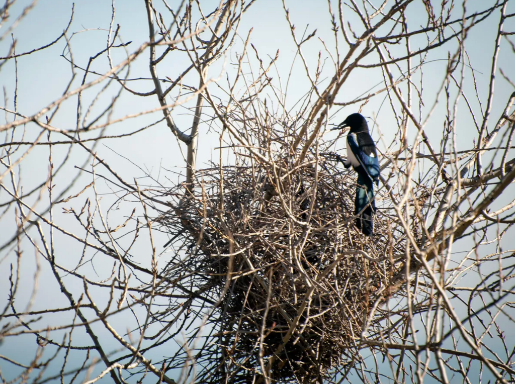
And back to the Romantics and Keats: he describes the poet as the most unpoetical of anything in existence. The poet is like a magpie, getting little silver threads and everything… But you observe those creatures, and they're very patient in the way they put these things together. But they're not pretty.
Of course, it’s a case-by-case thing. But nonetheless, I think it is a process of slowing down. Let us hold each thing up to the light, turn it to their own, and see how it fits in the great puzzle. If it doesn't align perfectly, nor should it be, it must find a place that makes an associative, resonant link to other pieces.
SY: This book is an incomplete biography of love. Love of the sea, the island, of childhood and Grandmother and some very specific things like the liner notes on a CD, love of handling the CD, which requires a lot of care, and love of the care that you have to give, and so on and so forth. I guess my question is, would you make it complete if you could?
IH: If I could. Would I write an autobiography? Well, don't see myself doing that in the true sense of what an autobiography is. Experimenting with autobiographical writing? Absolutely. I'm grateful that I brought this book together, which ultimately is sort of a trial run to see how I could actually put together a work in prose, because it took a lot of work to shape it and revise the individual essays and see how they stand next to each other and form a kind of a whole.
It was one way of letting me realize that, were I to take another approach and write a type of book-length work in this form, there's a chance that I can do it. So, yeah, it really has pointed me forward, which I think is what one wants out of a book for the writer: to step back and let it show you the way forward.
Because, in the end, I really do think language is its own existence. It's powerful, and it knows more than us, far wiser than what the writer is capable of. I might think I’ve shaped this language and created it in the way that this work shows it, but no, I am far less doubtful that as much as the writer is a creator, she's pretty much a vessel that language pours into. And somehow, the writer finds a form to balance that outpouring, to make it complete,
Completion terrifies me in some ways, and maybe that's because, for a poet, one of the ways to think of how the lyric poem works is that it's by sheer fragmentation and incompletion, that it doesn't always cohere. And so for me, I want the ongoing music, the echoes, and things that are fleeting, that you're trying to grasp at. You listen again, and you hear it going off, so you're on the chase, on and on.
So, my desire is not for absolute completion. I would not, though, just want something that is unfinished. It has to arrive at a state, like when you put the cup back in the saucer, it fits. I want that feeling, always.
SY: I think it goes back to conscience, too. Like, if the work needs to, if it wants to be finished, you cannot leave it unfinished. But do not give it an artificial completion.
IH: Yes. Though I do believe in artifice. Not an artificial completion, you’re absolutely right. But if I can return to the artifice, meaning the art of making and experimenting, it might arrive at a state of completion, which might mean that it’s dismembered completely, and rebuilt. Kind of like the aesthetic of dub music.
It has happened on different occasions to me: just by returning to it, the thing becomes created, and it might appear a lot more unstable and incomplete. But no, it has finally arrived at what's necessary to make it stand intrinsically on its own.