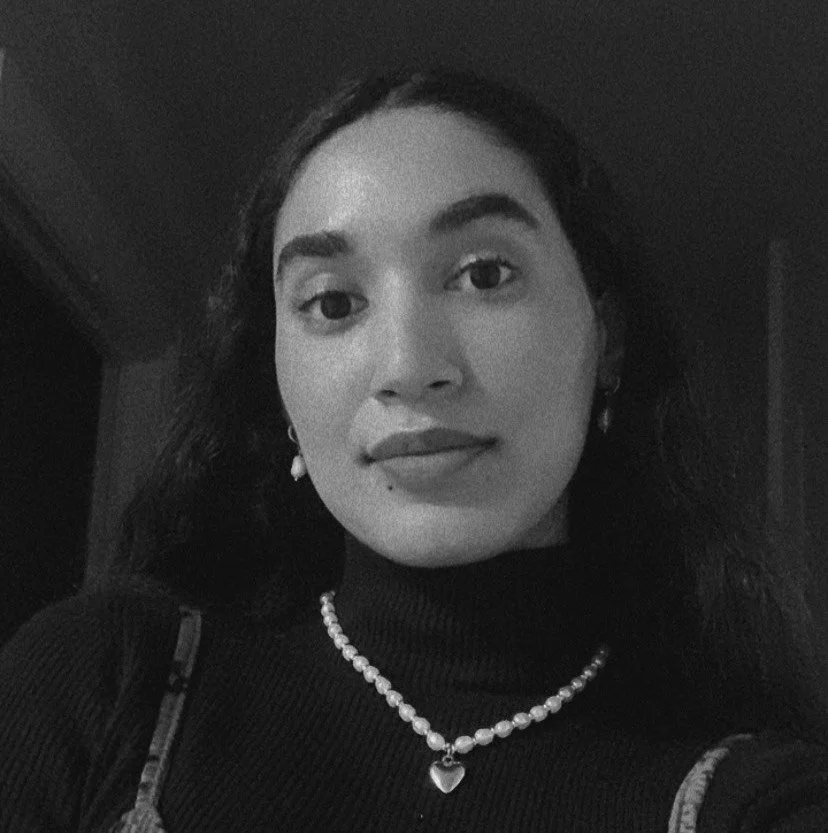
Interview: I. S. Jones
This past November, I had the pleasure of speaking to the amazing I.S. Jones over the phone. I first discovered Jones in the summer of 2023 when I had the opportunity to study under her for a five-week poetry workshop via the literary organization Brooklyn Poets, based in New York City. At the time, there were a lot of chapters coming to their end in my life and I didn’t know how to navigate the complex emotions that emerged at the intersection of endings and new beginnings. Jones’ workshop focusing on poetry and closure called to me because as she said in her first email to us, “One can make the argument that closure is a kind of faith all its own—it’s still something I don’t know if I believe in.” The workshop not only provided me with necessary language to process what I felt at the time but also with an incredibly generous mentor who I could share my immigrant daughter woes with.
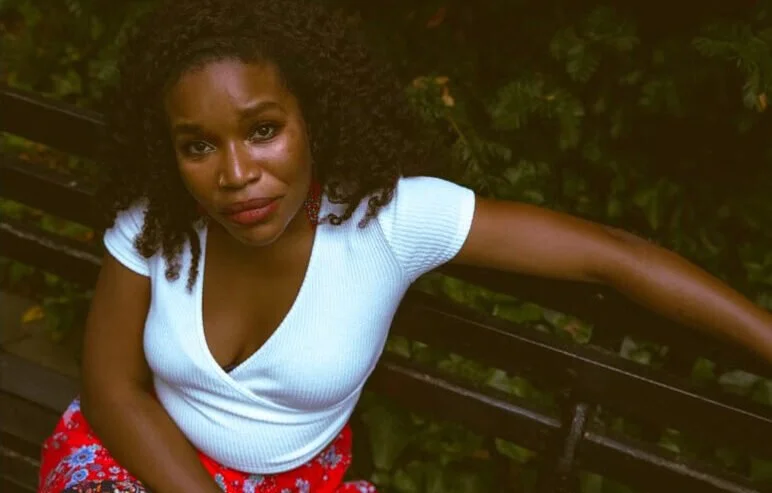
I. S. Jones, photo by Nicholas Nichols
Even though we did not keep in active touch, ever since I kept an eye out for Jones’ debut collection which she told us back then that she was close to finishing. It was a wonderful surprise then, when I was offered an advance reader copy of her debut collection, Bloodmercy, in early Fall of last year and had the chance to read it before the rest of the world. The collection reimagines Cain and Abel as sisters, blurring the space between the Old Testament and the modern world as the girls gaze heavenward with their enduring questions to God. It left me awestruck with its brilliant meditation on girlhood, family, faith, and mortality so I was overjoyed when Jones agreed to talk with me and was excited for the conversation because she had never been interviewed by a former student before.
The following is my conversation with her discussing her debut collection, musical inspirations, and poetics.
Hafsa Zulfiqar: The poem that taught me close analysis is Lorine Niedecker’s “Poet’s Work,” and lately I’ve been thinking a lot about what a poet’s work/purpose is, which always leads me to thinking about the purpose of poetry too. In Bloodmercy, the second section opens with the poem “Abel” which has the lines: “Some of us pick flowers, dream in blue & green, / others do the real work to bring home a heavy feast.” In another poem in the second section, which I think is probably my most favorite “Nocturne”—I always do a little ritual when reading a poetry collection and pick out one poem that I would like to teach from it and my pick for your collection would be this one. In “Nocture,” the speaker while talking about violence and slaughter mentions “lovework” and expands on it as “the ritual of hands tightened against faith.” Both these instances reminded me of my questions regarding the poet’s and poetry’s purpose. I’m curious about how you approach these questions and if your thoughts on them have changed at all, prior to and post the publication of your debut collection. I’d also love it if you could expand on “lovework” because I just so love it as a compound word and want to use it and want people to use it.
I.S. Jones: It’s funny, the poem “Nocturne” that you refer to is one of the oldest poems in the book. I had written it before I fully realized I was in the middle of writing a book. In that poem and as you read throughout the collection, so much of the intimate interactions straddle that line between love and violence. So much of the sisters, their livelihood, self worth, everything they know about themselves is predicated on their ability to produce labor, their relationship to God is contingent upon them producing and continuing to farm and breed chattel because of that the compound word lovework made sense. What one person sees as an act of violence, another person will see as an act of mercy. I wounded you because I pity you, this is my way of showing you mercy. So that line came to me, though this idea of how love itself is a kind of labor but in the context of that poem, it’s a euphemism for choking somebody. The labor to love you is also the labor to destroy you.
As for the first part of the question, whenever I think deeply about the poet's work, there are so many essays and other things I could quote, but I think what James Baldwin's says in his essay “The Creative Process,” about the role of the artist is really urgent for me—he says that in all of our doing we have to make the world a more human dwelling place. I think a lot about that—what is my obligation to make the world a more human dwelling place? How do we make the world a more human dwelling place? What are the artists that make me feel like that? Toni Morrison is an easy example. Aracelis Girmay, Carl Phillips, Vievee Francis, the recently dearly departed D'Angelo, their work and way in the world have reminded me that at the heart of all of our work, we try to make it a more human dwelling place. I don't think that's changed for me since the first book, but you know, after book two, it might, stay tuned!
HZ: Okay, looking forward! I’m just curious about if it changes at all because the publication process as a debut writer can be very exhausting. You also hear stories of people not wanting to publish anymore because of the process. So I’m curious if your thought process at all changed.
ISJ: It has dramatically. Writing a book is very taxing, publishing a book arguably is more taxing. My friends very clearly and multiple times warned me how emotionally draining and taxing it is to write a book. I'm putting a lot of my personal business in this book. Yes, it’s dressed in fable, mythology, and other things, but there is clearly a snapshot of my childhood in this book. I think the thing that is interesting is that people look at you differently. Especially when I consider the way my book came into the world, having not only won the Honickman but being the first Black woman to win it. I don't know if that explicitly has changed how people look at me but I can already feel how differently I present and move in the world. There are certain things I can't really do anymore. There are a lot of smaller prizes I'm now disqualified for because I have a book but now I can do even bigger things with this book, I'm now qualified for other things.
It’s also very emotional when people who are intimate to you in your life might read the book or might have some reaction to it. From beginning to end this book is about my family. There was a while where I thought there's a chance that my family could possibly read this book and it never happened. Nobody in my family read the book. So that presented a different kind of emotional space to reckon with. How do I move through that? How do I make peace with that?
HZ: That’s so interesting. We've been talking a lot about this in our editorial class—how do you navigate the publishing world when you’re so deeply entrenched in writing about family? The idea of your family actually reading your work, and yours hasn’t, so there is that question too, how do you navigate that?
ISJ: I think in some ways it sets me free, and in some ways, it can definitely feel sad. On the one hand, I'm set free to write how I so choose and I really do my best to try to be as even as possible. I think with family, it's very easy to fall into the space of you hurt me, you broke my heart, you destroyed my trust. Yeah, all those things are true but where does that come from? Where does that gesture towards hurt come from? I don't think any of us seek out to deliberately hurt our loved ones but what is that old adage? Hurt people, hurt people. When violence is the only way you know how to touch people, you're going to hurt everything around you.
HZ: So the other poem that I really loved is “A Brief History of the World According to Goats,” and it ends with this declarative “This is a poem about rot” that left me speechless. I was like, I need to read this poem five times again just so I can get to the end and can be left speechless again.
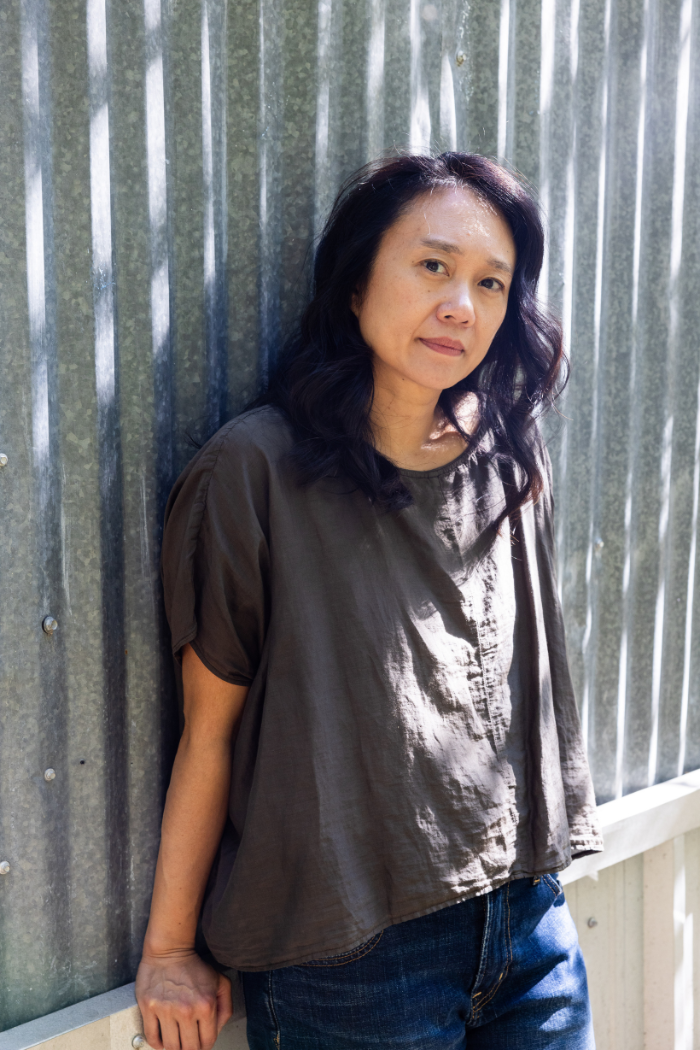
Jennifer Chang
ISJ: You know, I love that poem. I really wanted to have more fun in this book because as you have read, this book is very heavy. So I wanted some poems that added some balance. I had a lot of fun writing that poem. I just wanted to write a weird poem and I was deeply inspired by the poet Jennifer Chang, she’s a genius. The poem that she's most known for is “Dorothy Dandridge,” and the opening line of that poem goes “The daffodils can go fuck themselves.” It’s just so evocative and I wanted a poem that channeled that same evocation, same energy that she has on hers. I also just wanted to write a poem to show future students like, listen, you're not weird enough in your poems, you can get weirder, the universe will reward your weirdness.
HZ: You’re already kind of answering my question but the declarative is what fully left me speechless in that poem, so I started to notice them in your other poems as well. Throughout the collection, there are a lot of declaratives that shape individual poems and there are declaratives that shape the entire collection. The most notable example is the declarative that the collection opens with: “Violence is a failure of communication.” I think I can read that declarative endlessly and still think more about it even though it’s such a simple line. What is your approach to writing these powerful declarations— do you write poems around them or the poem itself births them? And what would you say are some other poetic techniques that are at the center of how you approach writing a poem.
ISJ: I love this question. I love a question that makes the poet kind of go under the hood of their own poem, so to speak. I have always loved declarative lines in a poem, especially as a woman, there is a very strong and commanding power and being able to say something and then it is so. I had a teacher in my alma mater who complained to me about how I used too many declarative sentences and I really thought about what exactly she was complaining about. Was she complaining about me making the same moves in my poetry? Probably. But I think also to a degree, she was trying to push back against this sort of authority that I knew I had in my work and that feels like a microcosm of how I've had to approach this book. Throughout the years, people have given me advice that ultimately, I did not use, but I was grateful for the advice because it made me more sure of myself. It made me clear about the vision of the book, some people will say, “Oh, it should be like this, this and this,” and when I hear that, I think to myself, “Okay, you don't see yet the vision of this book, but you telling me this, means that I still have more work to do in showing you the vision.”
Declarative sentences are definitely my jam. Another thing I just love are the logical movements in a poem. I love a poem that begins in the heat of the moment and then the rest of the poem is quite literally radiating out. This is most notable in the poem “Patience in the Bramble,” which begins with the line: “I don't remember squeezing the trigger, / though I never forgot the smell of gun smoke.” Anything else that comes after that, I'm in it, like whatever the hell happened, we are finding this out together. I love a poem that begins with so much heat and then allows the poem to kind of radiate out.
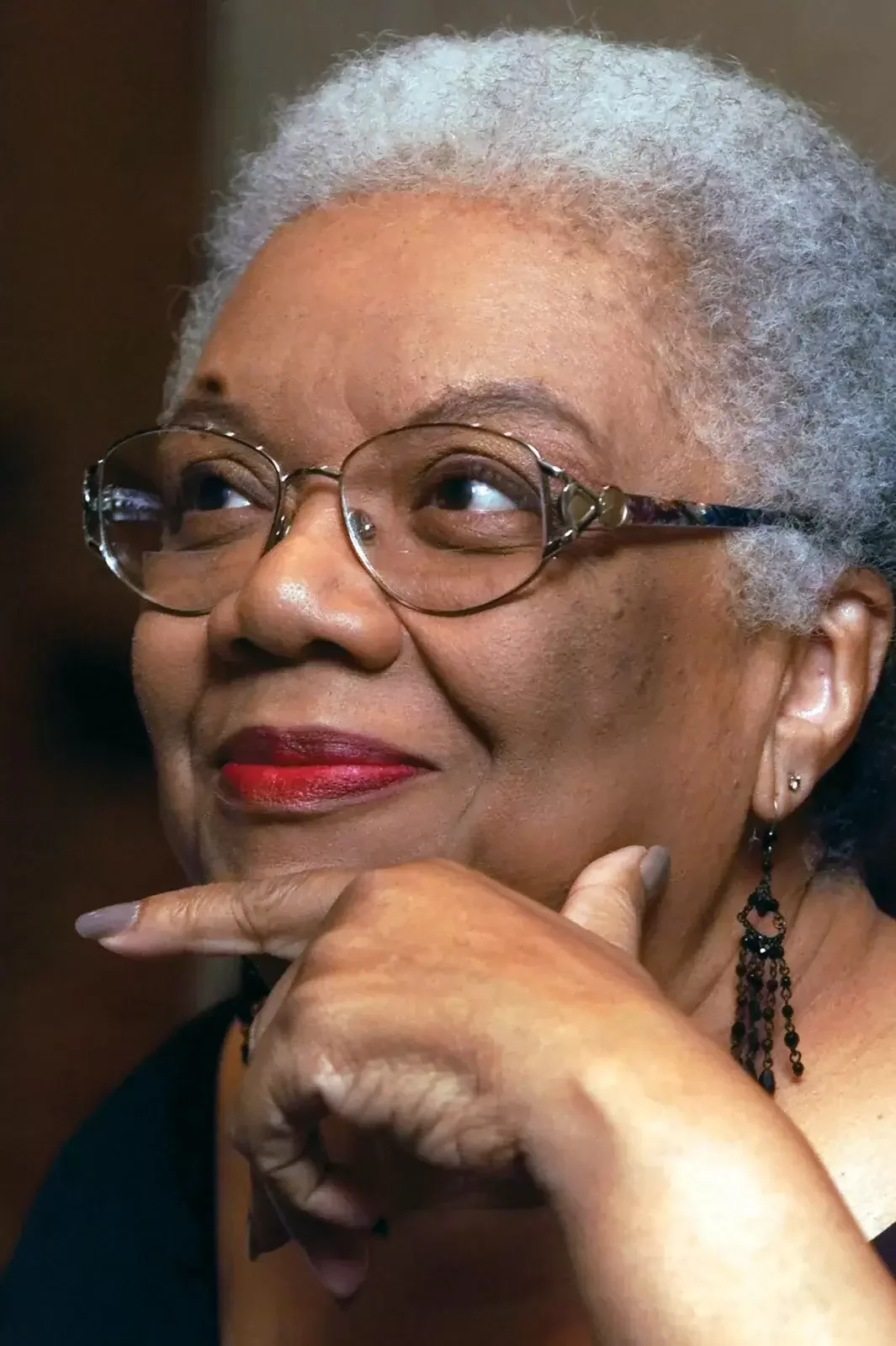
Lucille Clifton
I love poems that are governed by a specific kind of logic system, “A Brief History of the World According to Goats,” is a good example of that. I think also both of the characters Cain and Abel use declarative lines in their poem, but I believe Cain does it more. It was really important for me to poke fun at my younger, more arrogant self, which is one of the reasons why I feel so attached to Cain because this version of her is obviously very much so like my own childhood self.
My poetry is highly lyrical so there’s a lot of musicality naturally in these poems. I never skip a moment to use an em dash, you know. I also just love poems in the style of Lucille Clifton, deceptively simple, although that might not actually be true about my own work. I don't think my work is deceptively simple. But what I think is that she can take these moments of human living and make them into larger sociopolitical conversations. I'm thinking most notably about her poem about roaches, right? “I smashed and sliced all the while I did not care for their names.”
Another thing that I used in deliberate moments in this collection were couplets. An example of that would be “We Are Soft Between Hours,” which is the last poem in section one.
HZ: That poem was a lot, I think I needed to close the book after reading that poem.
ISJ: That's why it ends the first section because it's that kind of poem that makes you go, “I need a break.”
HZ: But again, I think similarly to the other poems, it also ends with a very powerful declarative that takes you aback: “I didn't say I want to be saved.” I think that speaks to the entire poem. There's so much happening in that poem. I would just love to hear about your writing process. Why choose couplets over other techniques?
ISJ: Well, because so much of this book is governed by a sense of duality, right? A sense of two-ness. Cain doesn't do anything without Abel and vice versa. It’s clear throughout the book that Cain has a clear obsession with Abel that very quickly veers into codependency. That is most notable in the poem “Vanity.” Vanity is a poem that's a big example of how obsessed Cain is with Abel. The idea of the small world of two guides so much of this poem so it was really important for me to have this in couplets.
Also, something I've never gotten the chance to say in an interview is that in stanza five of “We Are Soft Between Hours,” which reads “Earlier, we went to the river if only to relieve / the body of the sun’s tirade.” The sun’s tirade is the name of an album by the rapper Isaiah Rashad. Charles Bukowski is not someone you should ever take advice from, ever, but the only good thing he ever said was “the poet should keep some delight for themselves.” So sometimes I will sneak in music or hip hop references that are just for myself and if other people notice it, that's cool.
The poem “We Are Soft Between Hours,” is about girls masturbating for the first time but it's also about voyeurism, obsession, desire, and pleasure. It doubles down on how arrogant a younger Cain was, which is obviously a reflection of a younger version of myself, especially when she says “I said I have a problem. // I didn’t say I wanted to be saved.” There's a natural arrogance because Cain is the first born child of Adam and Eve and it was really important for me to underscore that in the first section, which is why originally it was going to end with one of the title poems, “Bloodmercy,” but when I read “We Are Soft Between Hours,” I was like this obviously has to be the poem that ends the first section. Nothing else would quite have the same kick.
HZ: That makes so much sense and that leads me to a question that I wasn't thinking about but now I'm definitely thinking about it. Very early on in my journey as a poet, the poet Rick Barot visited my undergraduate alma mater, Bennington College, for a talk. He spoke about sequencing a collection and mentioned this little trick that he does and he’s seen other poets do as well where you pick up on words that occur a lot throughout the collection. For example, he would focus on a word like teeth and count how many times it occurred throughout the collection and if that helped sustain a certain repeated theme. I was really fascinated by the whole idea and now I do it whenever I read the collection. You just spoke about how you had another idea regarding the first section’s layout but it changed while you were writing. So I’m curious to know more about your approach to sequencing this collection. Was there a different version prior? Or the version we see has mostly stayed the same? What are the ways that you were thinking about it? Was it more like Barot? Or did you have another technique that you were working with?
ISJ: Definitely another technique. I probably would have saved myself five more years if I had done it Rick's way. When I was at my residency at Northwestern through the Black Arts Consortium, I had written out three different versions for how the book would end. I thought about this for a long time. But before we get to the ending, let's kind of go back.
When it came to ordering the book, the largest issue that I had was that it was never clear who was speaking when. There was no clear distinction between Cain and Abel's voice and Eve's voice at the time was so underdeveloped. A lot of people were really encouraging me to cut her out of the book altogether. I'm glad that I figured out her character because when I realized that the crux of all the conflict begins with Eve, she is the reason that everyone gets kicked out of the Garden of Eden. She's the reason why Cain and Abel have a contentious sisterhood in the first place because she constantly triangulates. So when I was trying to figure out how to order this book, that was something I was really struggling with: figuring out the voices. Then I realized I can order the book by voice and by thematic structure.
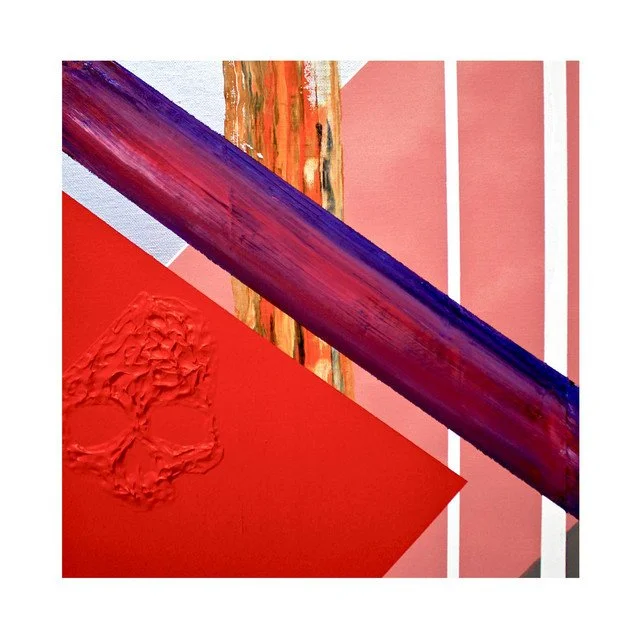
The book is kind of loosely ordered by chronological and thematic structure. Two albums that I credit with teaching me how to put together a collection of poems are Lupe Fiasco's Tetsuo and Youth and Moonchild's third album called Voyager, because both of those albums are ordered in a very specific kind of cyclical way. Lupe's Tetsuo and Youth is governed by the four seasons—we begin with summer, we end with spring. Voyager is ordered in a way to narrate the story of a young woman trying to convince a lover to give her another chance and the entire album is her going through denial to pain to at last acceptance at the very end when the lover does not reciprocate that sort of feeling. I think up until those albums, I really struggled with figuring out how to order a manuscript in a way that made sense to me. It helps that I used to be a music journalist, and that still to this day, deeply informs the way I approach my writing.

So when I realized that voice had to be the first way that I put together the book, it made sense that the first section had to be all of Cain’s voice with Eve interjecting throughout. It was really important to establish that because when her section comes later in the book, it all makes sense then. So section one is all of Cain with Eve kind of interjecting, section two is all of Abel. Eve does not interject in section two and I remember why I chose not to do it with Abel, because I was already trying to figure out what Abel's voice was. If you know anything about the canonical fable, Abel has no personality. Her name quite literally means vapor, it means air, it literally means nothing. She is smoke and obviously that's meant to be an allegory for how the character died. But I think because of that, I was really tasked with trying to figure out who Abel was as a character in the context of my book. A lot of things about her are that she really struggles with feeling beautiful, she’s gay too. She also struggles with never feeling as beautiful or as valued as her sister and so this idea of labor becomes really important because it's like, I may not be as beautiful, or as desirable as my sister, but I can work harder than her and make myself worthy of love. A lot of that really comes out for Abel, especially in the poem “Fawn,” which is the fourth poem in section three.
Section three begins with Eve's voice. Section three for me initially was the hardest because I had to figure out how to make each of the characters have their own poems and go back and forth between them. I saw another poet use this technique where they put the name of a voice in the upper right hand corner and I just thought to myself, that's brilliant. It helped relieve the issue of which character was speaking.
HZ: I’m incredibly impressed whenever someone can write a persona poem because I think it's one of the hardest things to write.
ISJ: I agree.
HZ: I think with other poems your concerns are different, right? You’re thinking about language, musicality, more normal concerns. But with persona poems, your main concern becomes making sure that the reader gets who the person that's being personified is. I think that concern sometimes takes over other things so it’s hard to create that balance. This collection is ripe with persona poems. The reader is constantly witnessing a reimagining of the speaker’s identity whether as biblical figures or different versions of them as they go through girlhood. I’m curious to know more about how you approach persona poems? What is your relationship to them? What are your curiosities or concerns about them and what made you decide to have them at the core of this collection?
ISJ: I love this question so much! As you know, persona poems can, if you're not careful, pose serious ethical concerns because essentially you are getting into the seat of someone else's voice, right? Cain and Abel is an established fable, even if some people haven’t heard about it. One thing I loved about writing this book is that some folks had never heard of this fable and I realized I had gotten the chance that someone's introduction to it could be through my book, which is a big responsibility. I was interested in exploring the suffocating nature of codependency and fraught family dynamics, thus, it made sense to utilize the vessel of this fable as an overlay against my own life. For example, Cain and Abel obviously represent my childhood and girlhood selves. Abel is a version of my sister but she's also clearly a version of me, all of these voices are, right? So I think finding that point with these characters in terms of where my personal investment was important. I felt personally invested in Cain because I'm also a firstborn and I know what it's like to have siblings that just ride your nerves one time too many. I also feel deeply for Abel for always feeling like she will be number two her whole life and the shame that comes sometimes with girlhood, being made to feel like, oh, if a boy comes on to you, for example, it's probably because of the way you dress or the way that you looked at him, right? Those kinds of things. And then also this deep, deep desire for intimate feminine relationships was something in Abel I really wanted to explore. With Eve, obviously she represents my adult woman self—this idea of choice and how the choices that you make affect the course of your life forever. But then also there are choices thrusted upon you as a woman of a certain age. I think often about how Eve came into the world after Adam and as a result, there are a lot of things that she was born into that she had no choice over, which is why I use the phrase, “this strange creature called husband.” Because there are things about her life like being in the Garden of Eden and never knowing what drought or famine or disease is and then having all of that ripped apart and her having to start her life over again. I don't know a single woman who doesn't know what that feels like, to feel like you have lost your core identity and all of these things that were expected of your womanhood. So with those kinds of urgencies at the forefront of my mind, it felt really easy to slip into these characters because I had a personal investment in their development and their growth by virtue of my own.
HZ: Because we're speaking about Eve, the other favorite poem that I have is “Contempt Towards Eden.” Nicole Sealey also mentions it in her amazing introduction for the collection.
ISJ: Oh my God, immaculate.
HZ: Truly, I was like, wow, this introduction is amazing, do I even want to interview you anymore? She summarizes it all! But yes, I think one theme that the collection engages with predominantly is that of violence, especially violence against women and how it’s interconnected with faith. I was especially taken by the ending of the poem , “Contempt Towards Eden”, where we have Eve as the speaker: “One day, I will tell our daughters / every time you touched me it was a violence.” In writing this book, where did you begin and then arrive with your sensibility about violence and how you wanted to speak about it in the book?
ISJ: I think because Eve has been so historically villainized for her role in the fall of men, it was really important for me to allow Eve for once to tell her story from her own mouth. Because man, me and John Milton, we have longstanding beef, me and that guy.
HZ: I love how Milton is mentioned in the poem.
ISJ: I wanted to actually write more poems about taking Milton to task, but one, I decided against it because of the space but then also, I didn't really want to center him more. I really didn't want to center him at all. So I had decided against it. It's also the same reason why Adam has no poems from his voice. It’s funny, Adam is a very powerful and prominent voice in the story, despite having no poems to his name but with that poem, “Contempt Towards Eden,” I love that you brought it up because one thing that connects Nicole and I is that Nicole has a poem called “candelabra with heads,” which ends with the line: “Who can see this and not see lynchings?” She had an editor that she trusted and respected who said that the line is a bit off-putting. When she made the choice to put it in her book, she left it the exact same way. Same thing happened with me—I had an editor look at the poem, an editor that I have an immense amount of reverence for and a lot of respect for, and they actually wanted me to change that last line to “One day I will tell our daughters, every time you touch me, it was the Lord's mercy guiding your hand.” I remember sitting with that line and I was like, no. No. Respectfully, this is not what I want because I wanted to be very clear, how does that old adage go? If one woman told the truth about her life, the world would burn. When I think about that line, I think about Eve a lot. If she told the truth about her life, all of humanity would be flipped inside out. It was really important for me to have “Cain and in the Peopleless Kingdom,” and then “Contempt Towards Eden,” is meant to be that exact same poem, but told from Eve's perspective. In “Cain and the Peopleless Kingdom,” Cain is playing outside and the reason why she's playing outside is because her parents are fighting each other. They're very loud and fighting each other. That's why that poem ends with “Like what Adam does to my mother, dragging her / by the throat into the bedroom.” So it was really important to me to not only utilize those story devices from the New Testament but for Eve to also tell the truth about what happened to her. I never believed that she was so dumb that she didn't know that she was intentionally destroying heaven on earth. I believe that Adam hit her one time for the last time and as a result, she just said, listen, if I can't have peace, neither of us are having peace. God had tasked her with taking care of all of the animals and all the plants in the Garden of Eden but then she didn't know any better when it came to the cursed fruit? That doesn't make any sense.
HZ: Since we are still and predominantly talking about biblical figures. The main conceit of this collection is the reimagining of Abel and Cain as sisters and the interplay of biblical stories threaded with complicated family relationships. I’m curious about the story of the genesis of this book and especially the choice of combining and overlaying religious and family stories to create a landscape that at once feels very intimate yet vast in the shadows it casts on the reader’s brain. I think this is a collection that will stay with me for very long. Even while I was reading it, I had to really sit with every single poem before I could move on to the next one and that happens far and few in between collections because I'm reading so much right now as I'm part of a creative writing program. So it was a different and a kind of slowing experience. I was like, wow, why do I have to rewire my brain every single time I start a pie,?
ISJ: Well, I'm honored. So the year was 2017. I was living in Astoria, New York at the time with my sister. It was the first time we had lived together as adult women and it was a bad choice. Yes. It was not a good time, Hafsa, no one was having a good time in there. We were just at each other's throats nonstop. It was bad. In between all of that, there was a lot of socio-political unrest. Trump had just been elected and as a result, I don't know if you've ever been to Astoria—
HZ: I have!
ISJ: So you know. Astoria is a very cute place and at least when I lived there, it always felt relatively safe. And by safe, I mean there were no police around. So I was just moving through a lot of anger. I was in a graduate program that I hated. My sister was a terror to live with. I was no better but we terrorized each other and this orange bastard was about to rise to power and I just felt really suffocated, angry, and trapped. I was 27 and I was very angry during that time. I was just moving through a lot of rage, a lot of hurt, and the poems were a safe vessel to pour all of that into. With that, the first poem I would ever write for the book that I didn't even know would end up in the book was “Self-Portrait as a Black Girl Becoming the Beast Everyone Thought She Was.” In the original run of this book, that poem was not related to the book at all and for a very long time, I thought it wasn't going to be. But at the last hour, when I chose to send the book in for the Honickman, I just said, I'm going to throw the poem in there, see what happens. Not only did it end up becoming one of the most pivotal poems in the book, it ended up becoming one of the poems that Nicole Sealey pointed to as the reason for choosing the collection. So I wrote Self-Portrait and then I wrote a version of Cain. The version of Cain that's in this book is not the very first version. This version is the twelfth final revision of the same poem. I might have been obsessing too much about the opening poem and I'm sure you understand this, if you don't catch your readers within the first few poems, you will lose them. So I just started writing these poems and I didn't really think it was going to be a collection. I didn't think it was going to go anywhere. Then the following year, 2018, I was in Rochester, New York, reading alongside the living great Patricia Smith. I had just said in passing, “Oh, I'm writing these poems about Cain and April, reimagining them as sisters,” and I was reading them. Immediately after the reading, she pulled me to the side and she said, “Where's your book, young lady?” And I was like, what? And she said, “I don't know about any chapbook that you're writing. This is a book that you're writing. Finish your book.” And I said, yes, ma'am. When Patricia Smith gives you advice, it is in your best interest to take it because she doesn't have to give anyone anything.
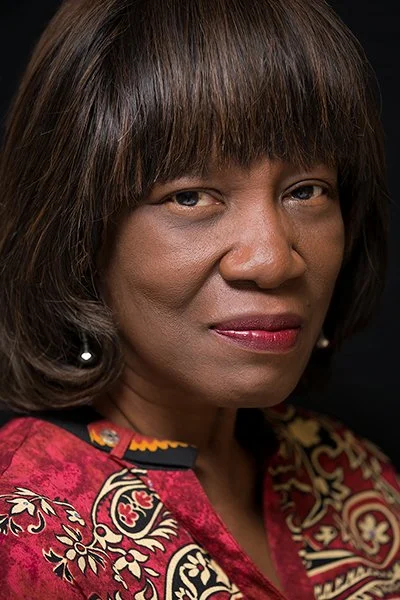
Patricia Smith
For the next few years, I was just really intensely working on this manuscript. I moved around a lot. I had started a lot of the book but I had put it to the side when I moved in with my parents to work on my chapbook. Then when I went to Madison, Wisconsin, I had finished my chapbook and I was still working on the folding. I had taken spurts and breaks in between. By this point in the timeline, we're in 2022. We're in the full swing of the pandemic. I'm just in the house doing nothing but writing poems, thinking about poems, and rolling around in the Midwestern grass, trying to figure out where this book is going. At this point, I'm still trying to figure out their voices. I think a lot of trial and error really helped with people giving me bad advice because the bad advice helped me realize, oh, this is what I don't want. But I'm grateful for every single person who challenged me and pushed me and said, “oh, this isn't working.” Even that one weird white man who came up to me and gave me unsolicited advice about my poem at a KGB reading and said, “Oh I don't think your poems are doing what you think they are doing.” before telling me that he felt a way that I got into Ploughshares and he didn't. But we don't have time to talk about white mediocrity today. Anyway, I'm grateful for all of those people who told me those things because I had realized that I did know the vision of the book, the job now was to allow the book to grow me as a person.
HZ: I love to hear drama between sisters. I have two.
ISJ: Okay, so you understand intimately!
HZ: Yes! Your response made me think a lot about revision and reminds me of someone that I've been reading this semester a lot: Marianne Moore. I'm taking a class on American modernist poetry and she's one of the poets that we've been reading a lot. Similar to your story, she never even wanted to publish her poem. She had an aversion to publication. But her friends were like, no, no, you have to publish. For her first book, they kind of just combined her poems and published it. She published a second collection but for her third collection which she titled Complete Poems, she excised a lot of major poems that she had in her second collection and the dedication read: omissions are not accidents.
ISJ: You saying that reminds me, if I can give any young poet any advice for writing it is that have good friends in your corner. I mean, my best friend is very modest, but I am not. I do firmly say that if not for my best friend, Julian David Randall, I may have thrown this book out entirely because at the time, I thought, oh, no one's going to want to read this book, it’s weird. They were like, “I don't know what the hell you're talking about. Everyone wants this book. Finish your damn book.”
HZ: Yes, I agree! So one of Moore’s most famous poems is an ars poetica called “Poetry.” The most read version which I also read during my undergrad is the 1967 version and it goes:
I, too, dislike it.
Reading it, however, with a perfect contempt for it, one discovers in
it, after all, a place for the genuine.
And that's it. This is the 1967 version but there was an earlier version published in her collection that is much longer.
ISJ: Oh, wow!
HZ: There was a version before that as well and they’re all published. You can actually still read all three versions. She is just such a wild poet when it comes to revision and being like “Yeah, I don't like these lines, I'm going to do away with them.”Almost excising them out of her cannon and being like, “Yeah, not part of me anymore. Go away.” And just by saying that she makes them go, even though they exist and people still read them. Keeping this in mind, I have a two-part question: How did you approach revision over the years? Because you took your time with this book and what is your relationship to revision? Because I think every single poet has a very different relationship to it—are you a “revised-as-you-go,” poet? Are you a “I'm going to see this poem after three months and then revise”?
I know this is your debut, it’s your darling. I firmly believe that poets are most connected to their debuts because it’s their first baby out in the world but, and this is my second part of the question, if later on, you were to completely channel Moore, are there poems that you might excise? For example, if you were to write a Complete Poems later as she did, would you omit certain poems and have the collection open with the quote “Omissions are not accidents,” as she did. If yes, what are the poems that you would want to omit and your reason for omission? Or are you satisfied with all of them?
ISJ: I feel very confident that if anything I would have added more poems to this book because at the end of the book, the girls are all grown up and they meet each other one last time to say goodbye. I would know from both of the sisters what happens to them after they both say goodbye. In my head, Abel hops on a horse and she rides back home and the person that she falls in love with in the poem “First Sighting,” in Bloodmercy those two get a farm and spend the rest of their lives together. In Cain’s case, she goes out into the world and starts her life over again with this sort of small heartache that is sister shaped. So I don't know if there's any poems in this book that I would cut out. I think the only poem that I would cut out, but maybe expand it instead of cut it, is “But Never the Same Love Twice.” That poem is very heavy and it's probably the only poem in the collection that I don't read at readings, it’s more of a thing of you'd have to buy the book to read it yourself. But I'm very proud of this book and I stand by every single thing I wrote in it. Oh wait, I would probably maybe change or cut the “Land of Nod as Nigeria,” but I still like that poem so I’ll keep it.
I'm really proud of everything in this book because I took my time with it and I am really proud of myself for not caving to the external pressures of having a book out by a certain time. Sometime, I don't say a lot but I have mentioned it here and there is that before my book won the Honickman, it won a different prize, a really amazing first prize for a debut collection, but I had looked at their prize and I looked at my book and I really dreamed of the life I wanted my book to have and the press that the book won the prize for they would not be able to deliver that. Nothing against them, they’re a really wonderful press, but I was very clear about my vision and how I was willing to hold out for that for as long as I had to so I'm really proud of myself for that. I hear what you mean about being indued to the first book because I love this book because I stayed the course and finished it—I got the cover that I wanted, the font type that I wanted, even the kerning, everything that makes this book look the way it does. I'm so happy about it. Holding my book for the first time, I was running around the house with the box of books in my hand like it was a small child and my editor Elizabeth Scanlon who I have affectionately called my “midwife editor,” when when I opened the box, she had said, “Here’s your baby, exactly six pounds and nine ounces!” I really got the princess treatment during the production of this book and it is very rare to say from beginning to end I was completely satisfied with every single step that made this book possible and I'm very fortunate for that because many other poets often don't get those kind of experiences, but if I had my way every single poet would know what that great treatment is like. I was actually thinking about how poets such as Carl Phillips and Sharon Olds are having their debut collections reprinted celebrating twenty years and how some of the poets are even adding things to it and I've been thinking a lot about that myself too: how would I look at this book or see it in twenty years from now? And I would see it first as “Wow, I was really wildly ambitious with my debut collection!” Because honestly I was thinking to myself, who's going to stop me? I mean I had a Rainer Maria Rilke epigraph in this book and nobody checked me. So I guess I'm more powerful than I once thought but I'm also just very proud of myself for writing the book I really wanted to write. I love this book and I'm proud of it because I did not have to be anyone else but myself to exist in its world.
So with revision, I don't revise as I go anymore, it’s a bad habit because then I start questioning if anything in the poem is good. There's some poems in this book that are one drafts such as the poems “To Will It,” and “Of.” “First Drought,” is also a single draft, so is “Psalm of the Morning Twerk,” and “Juice or Milk.”
HZ: “Juice or Milk,” is a first draft, that’s unbelievable!
JUICE OR MILK
I was born angel-tongued, though no one knows it now
Mommy spoke Yorùbá, and I spoke it back to herIf we always talked in the language of angels, we were always in prayer
And so, when teachers gave each child a snack during lunchtime,
they asked, Juice or milk? and I repeated back the sound,not understanding a tongue so flat, so rote
In isolation, language dies on the tongue. I covet my little Yorùbá,
keep sparse these words like silver dollars, remembering:Mimo [meaning ‘holy’, meaning ‘clean’]. Ife me [my love]; omi [water];
Iyọ [salt]; Bimo [soup]. Diẹ iyọ, meaning More salt
evokes “ischemic” and “hemorrhagic.” Keeping close:Gba [take]; Fi mi silẹ [leave me alone]; Ọdẹ [meaning “dumb”]
Ode [meaning “hunting”]. I was a child but smart
enough to know a father’s curse.
Smaller men need power just as God needs people to forgive.
(from Bloodmercy, originally published in American Poetry Review)
ISJ: Yes, I snuck it in the book really quickly. I think the reason why it was easy for me to write it is because it's the oldest myth about myself that I know, so you can make the argument that I've been waiting my whole life to quite literally write that poem. What else is a first draft in here? “Daddy’s Girl,” and “First Sighting” are also first drafts so remarkably there are a lot of first drafts in this book now that I’m thinking about it. In terms of revision, sometimes there are some poems where miraculously it's one and done, right? But other times there are poems where when I'm writing I realize that I have not said everything I need to say so I need to go back in there and add more things. I often think of a poetry draft as modeling clay or a composer trying to turn a string of notes together. Having the draft is exciting and I love revision because that is really for me where the meat and potatoes come together? I often see it as I have all of these raw materials to work with, now how do I sculpt them into the vision that I see for myself? Especially with “Twice as Many Stars as Usual”—I wrote that poem when I was at Bread Loaf and I remember, I was quite literally outside in the cold watching shooting stars go past and I remember feeling like I had one line and then I was trying to figure out how do I string it into the next line and to the next line and to the next? I mostly handwrite all my drafts but when I was typing this out, it felt like I imagine how a composer makes music from scratch, which to me feels much more daunting than a poem because you have all this music in you, your job now is to make it into a translatable language that other people can consume, which when you say it out loud like that, it's not all dissimilar from poetry, right?
When I revise, I think I have a clear vision of what I want the central conceit to be, even though whenever I'm writing a poem, I often have either the title or the first line or I have a line that I know is not going to be the first line, rather, the poem is trying to work its way to that line that I first thought of. Thank God my poems are smarter than me—the poems will sometimes tell me, “This is not it. Try again,” which I'm excited about, because one thing that I've accepted as a part of my poetry practice is that I'm going to write a whole book, possibly finish it, and then throw half away and then write it again. When I say this to other poets, they're like, “that's crazy!” and I'm like, objectively, yes, it is. It's insane. You know, Kanye West is a very confusing man but one thing I learned about him that has also been embedded into my practice is that if you can make it, you can make it again and better. So that's why I'm not really afraid to throw away things, like with my chapbook, I threw away half of it when I finished it, and I rewrote it again. As scary as it was, I was like, “Oh, I can't do this,” but then I was like, I literally just did it so I obviously can do it again. I never want to be too precious or too beholden to my work because when I think about poetry and its transformation, destruction is a part of that too. I can tear up a first draft and start over or I can take four lines from an old draft, throw it away and then use those four lines as the foundation for something new. In writing this book, I have become, I would like to believe I've become less precious and more surgical with my writing.
HZ: I am so amazed. Your work in this collection challenges what I’ve heard as advice for writing good poems a lot: No poem is done at the first step. You're like, yes they are and there's ten poems that are all first drafts in this collection.
ISJ: One thing about rules I've learned during the production of this book is that people constantly try to tell me what I can and can't do in writing, and it's like, but you can't stop me. You have been my former student, you can attest to this. I never tell my students what they can or can't do. I'm not interested in telling them what their capabilities are. My job as your teacher is to show you what your possibilities are, which as far as I'm concerned are limitless. Make the mistakes, break the rules, do that weird stuff that no one tells you that you can do. Then let's discuss how the execution could be better. I just never ascribe to this school of thought.
HZ: I agree because truly who decides when a poem is done? It is completely up to the poet.
ISJ: I do think it's a matter of instinct though and that is something that you sharpen over the years. Sometimes a poem really just needs one draft, sometimes a poem needs twenty. Both are valid. It's a matter of the poet looking at the poem and feeling like, did I do everything I set out to do? I'm very fortunate that I can still look at this book and be moved by almost every poem in here and I think if I did not feel moved, I would be confident I didn't do enough work.
HZ: What are some things that over the years you've done or experiences you've had that has made you sharpen this instinct of knowing what a particular poem is, when it’s done, when it’s time to let it go and destroy it and transform it into something new? Or keep it for something that's going to come later that is not part of this particular book? What do you feed your soul to sharpen this instinct?
ISJ: It helps to be surrounded by a lot of very brilliant peers who are very generous, smart, read a lot, and love to yap about poems. That part, I think more than anything, is probably what truly inspires me. Getting to learn under Vievee Francis at Bread Loaf was really integral to me trusting my instincts more. Having had older poets I can reach out to over the years and gain wisdom from them. Going to residencies and conferences too. Being in conversation with other folks who think and move through the world differently than you, I think, at least for me, is a really important grounding force. Also the hours and hours and hours I had alone in the dark where I was reading and writing and I had paper scattered all over my table and I was pinning poems to the wall, quite literally discovering language in real time. That part for me was the delight of all of it.
It also helps, like I said, having really good colleagues and close friends that you can share drafts with. I feel very fortunate that I have very smart and brilliant friends who are also very good editors in their own right. It helps a ton to have friends who can tell you, “This line is not good. Throw it out. Oh, this line is interesting. Keep it.” I's worth its weight in gold if not more so. Also just being out in the world where poets are, where there are readings, events going on, where you can be in conversation with folk is really important because it sharpens your oyster knife to quote Zora Neale Hurston.
HZ: Throughout our conversation, I've been hearing a lot about how important community is to you and to the creation of this collection. As a young poet, it is a kind of struggle to find that community where I truly feel like both me and my work belong there and can be transformed by just being part of that community. I'm curious about how you found your community? How did you open up yourself and trust them with your first child?
ISJ: So this year is an auspicious year because many of my close friends and I are celebrating ten years of friendship. A lot of us became very close at a writer's retreat called The Watering Hole, which is Southern based, POC focused writing retreat that really allows people to truly be in community with each other. Many of us were just young poets trying to figure out writing and it really feels nothing short of good fortune. I really wish I could say this is the formula to getting solid friends but it really is just a leap of faith, truly and honestly. At least for me, sometimes when I look at some folks, I can tell that they’re going to be a part of my life for a long time and that's how it was with my best friends. So there was The Watering Hole, workshops at Cave Canem, Callaloo, and then also honestly I made things—I made tables for folks to come sit at. I ran my own workshop for five years called The Singing Bullet. I started a reading series here in Chicago in the Southside called Canto-Kójo. If I could not find my people, if I could not find the spaces where my people were, it was really important for me to just make those spaces. I think those are all a part of the things that come with being a good literary citizen.
HZ: Following up on that question, you've mentioned throughout the conversation how you hold your ground when people have given you bad advice or said things that you don't are helpful for the poem or even relevant to it. You've already given some advice to young poets, but what would be your advice to young poets who are also navigating the space of a lot of feedback from poets who they really appreciate or editors they really appreciate and this space of negotiation—how much does one let go and where should one push to keep it as is, or stet as we call it in publisher speak.
ISJ: I think it helps to try to try everything and see what works and what doesn't work. So much of me figuring out where I am in poetry was a lot of trial and error, a lot of making mistakes, a lot of doing things wrong or badly before I started doing them in ways that made sense. Also of course a lot of reading and writing. One of the pieces of advice I ever got as a writer was always be reading more than you're writing. Truly life-saving advice because you need some place to pull from within yourself. So I think it helps to frankly just do trial and error, apply those ideas or lessons, see if they work for you because they might not, but they might.
Another thing is if there is something in your work that you feel fiercely about and you are confident that this is strong, fight for it, you know? It's really important for you to be able to stand on things that you passionately believe in because if you're a poet and you don't believe in anything, I don't know what to tell you. Being a poet comes with a lot of conviction for better or worse. I say all that to say is when you are trying to create something you have never seen before and you have people in your ear giving you advice that might be contradictory, stay the course, keep working, keep writing, keep trying, and failing. I think keep trying and failing and then in that failing you will keep trying and succeeding and succeeding again.
HZ: You just mentioned how the most helpful writing advice you received was reading more than you're writing, and peppered throughout our conversation, you’ve mentioned lots of literary elders and siblings who you were inspired by or in conversation with. What are maybe the five books that you read that really helped shape this collection and push you?
ISJ: Let me see. So, Forest Primeval by Vievee Francis, War of the Foxes by Richard Siken, Pale Colors in a Tall Field by Carl Phillips. Those three are the top three. Oh, here’s the other two: Madness, Rack and Honey by Mary Ruefle and Girls That Never Die by Safia Elhillo. I was really surprised that Safia’s second book was so influential to my book because our books might have overlapping themes but they're very disparate in terms of their execution. There's a specific poem in Girls That Never Die, it's called “Pastoral,” and that poem was really influential in my thinking about how my collection could end. The poem is so tender and it has these sort of flecks of melancholy in the middle of this large, beautiful nostalgia. It was a kind of tone that I wanted to find a way to make it to my own voice in the book.
HZ: Such a small world, I heard Safia Elhillo read for the first time earlier this semester at Ithaca College!
ISJ: That’s amazing! Another poem in that collection that was really influential to me is the poem “1000.” The way that poem ends, “I am so tired, I am one thousand years old. / One thousand years older when touched.” That poem was really influential to the poem “Fawn,” in my collection. So I was reading quite a bit of Girls That Never Die very slowly because I didn't want the book to end.
If you want to learn syntax that rewires the brain, I can't say enough about Carl Phillips. You should also read his essay collection called Coin of the Realm: Essays on the Life and Art of Poetry.
I.S. Jones is the author of Bloodmercy and the chapbook Spells of My Name. She is the founder and co-host of Canto-Kòjo, a monthly open mic and featured reading series based at Call & Response Books on the southside of Chicago. Currently, she is a Senior Editor for Poetry Northwest, where she runs her column, The Legacy Suite, a three-part interview documenting the journey of writers publishing their debut poetry collections. The New York Times Book Review recognized Bloodmercy one of the Best Poetry Books of 2025. While she has lived in many places across the U.S., she gratefully calls Chicago home.