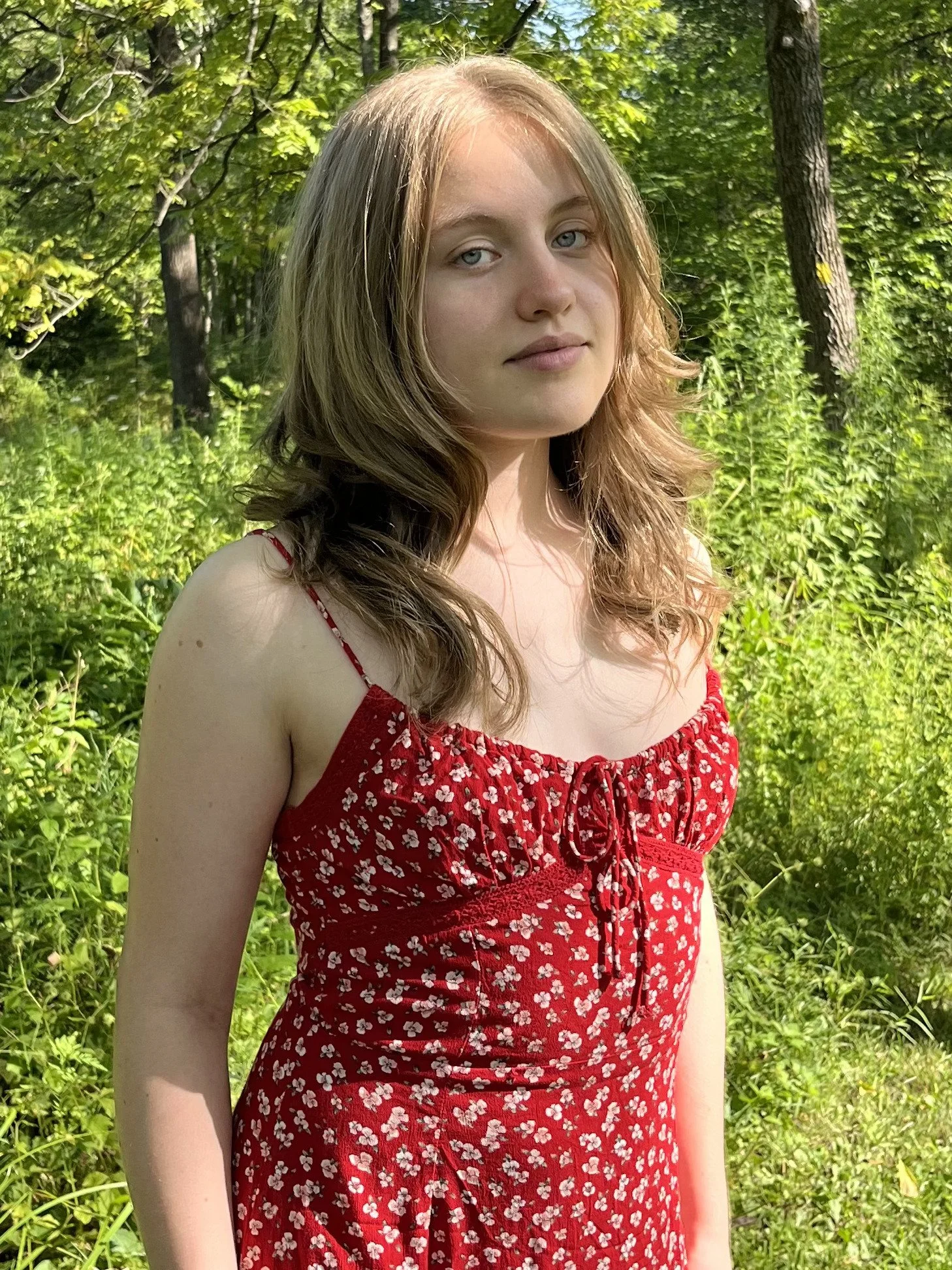
Askold Melnyczuk has published four novels, a collection of stories, and most recently, a book of selected nonfiction,With Madonna in Kyiv: Why Literature Still Matters (More than Ever) (Harvard University Press, due in November 2026 and available for pre-order now). His debut collection of poetry The Venus of Odesa, which spans nearly fifty years, was published in October 2025 by Mad Hat Press. His novels have been selected as a New York Times Notable, a Los Angeles Times Best Books of the Year, and an Editor's Choice by the American Library Association's Booklist. He has edited a book of essays on the St. Lucian Nobel Prize-winning poet Derek Walcott,Between Fury and Peace (Arrowsmith Press, 2022), as well as anthologies of numerous Ukrainian writers. Individual poems, stories, essays and translations have appeared in The New York Times, The New Yorker, The Paris Review, The Gettysburg Review, The Threepenny Review, and elsewhere. Founding editor of Agni and Arrowsmith Press, he currently teaches at the University of Massachusetts Boston.
I have gotten to know Melnyczuk well, having worked with him at Arrowsmith Press for five years, and am honored to have been able to interview him. We communicated primarily over email.
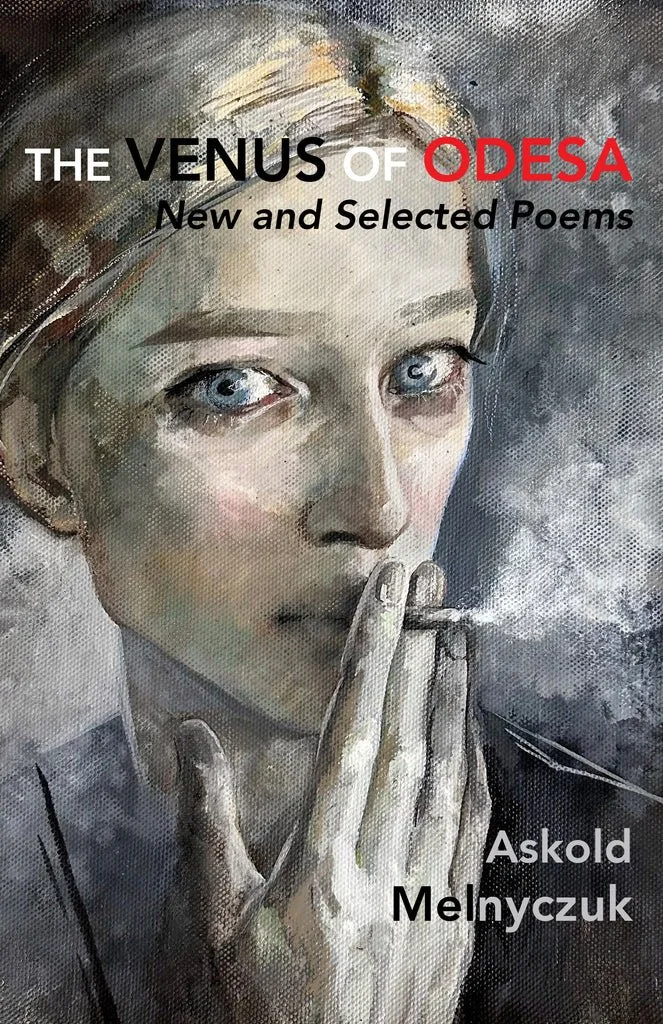
Lara Stecewycz: You began writing some of the poems in your first and most recent poetry collection The Venus of Odesa fifty years ago. In the first poem of the book, “Dance of the Tomahawks,” originally published in 1974, the voice of an ambitious, politically-inclined young writer emerges. In putting together this collection, what made some of your earlier poems “alive” to you, as you say in an interview with Stuart Dischell for Blue Mountain Review, after so many years?
Askold Melnyczuk: For me poetry is always and foremost about the ear, about a music that slides in as though on its own volition—though once it's entered, what matters is where it carries the reader: the style without the substance will soon tire a reader. A poem must carry the nourishment in every line—even if the morsel of meaning can't itself be contained by a single line or stanza. The whole must feel somehow inevitable. Sometimes the poem's music is “composed” by adhering to a more or less strict, but not ideological pattern (a line largely in iambic pentameter will often contain a trochee, a dactyl, etc); other times it's in so-called free verse. You probably know Robert Frost's quip about free verse being like playing tennis without a net—and then you might remember T.S. Eliot's riposte: “No verse is free for a man who wants to do a good job.”
All this is easy to say but hard to define precisely. Memorability is one way to measure a poem's power—though I can't say I remember many lines of Homer.
LS: How do you define poetry? You’ve mentioned experimenting with various rhythmic patterns as well as forms, including sonnets, villanelles, and sestinas, but ultimately turning to free verse. In your own writing, what do you find yourself prioritizing more, whether or not you’re aware of it (e.g., imagery, music and rhythm, lyricism)?
AM: There are many ways one defines poetry to one's self. I often think of it as a record of “extraordinary perceptions”—the poet has found language to say something that communicates to the reader a feeling, a thought, a perception which the reader hasn't experienced before. The words wake something new in the reader. My friend, the late Fanny Howe (poet, novelist, memoirist, thinker—one of the greatest to emerge in this country in the 21st century) said something I'll never forget. We were having a conversation about the Gospel of Mark, Chapter Two—and you should know that Fanny was a bona fide mystic, acutely tuned to the invisible world, though entirely without bullshit about it. Fanny described poetry as “backward thinking.” What, I asked, could she possibly mean. It’s pretty simple, she explained: you have an intuition, pre-verbal, and you then work to find the right words to articulate it.
LS: And how well she described it, poetry—in such a way I haven’t myself been able to, but will now use in defining poetry for others. Having had the privilege to work closely with and befriend Fanny Howe, I’m curious about others who have influenced you. Poets like Ferlinghetti and Ginsburg you’ve recalled influencing you as early as high school. How have these influences changed over time?
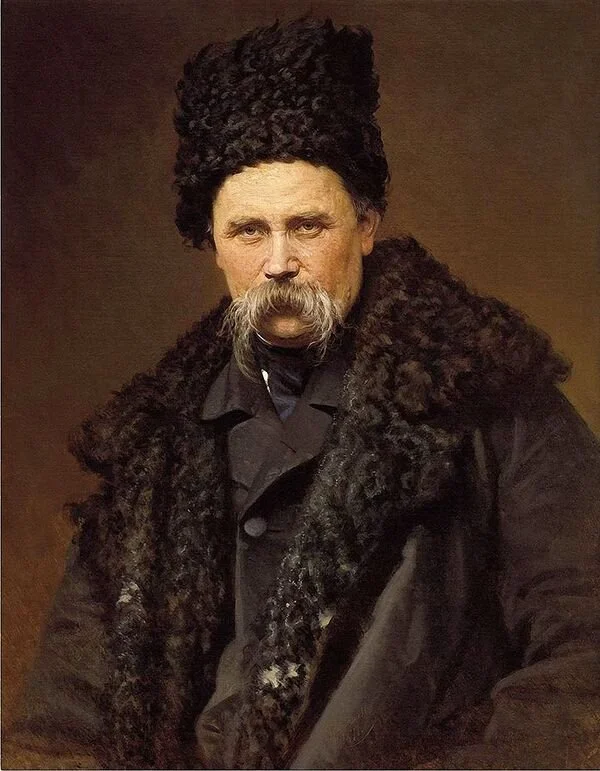
Taras Shevchenko
AM: I have to note that my sense of the importance and potential power of poetry owes everything to my mother's love for the medium. She introduced me to the children's verse of Ivan Franko at the age of two. Eventually, we progressed to the passionate nation-creating verse of Taras Shevchenko, so that by the age of seven I was memorizing poems that were six or seven pages long and then reciting them on stage when the emigre community around Elizabeth, New Jersey celebrated the poet's birthday in March. I'll add that seeing the enthusiasm with which my performances were received—people applauded and seemed to get a kick out of seeing a little kid spouting prefabricated profoundities—left me deeply suspicious of all performance for this reason: I was saying things I did not in the least understand, as the poems were way beyond my life's experience. I remember feeling so uneasy about the audience's enthusiasm: if I didn't know what I was saying, how could I possibly move them…
The Ukrainian verse was my “gateway” to poetry. Ferlinghetti I discovered by accident at a chain bookstore at a nearby mall. His volume, The Coney Island of the Mind, had already sold half a million copies. It remains one of the best-selling books of all time. The free-verse poems in it are immediate, accessible, at times angry, at other times ironic and mocking, and at other times elegiac in their celebration of the world. Ferlinghetti had things to say and he said them clearly. That made them more accessible than the poetry we were studying in school. In fact I got so excited by them that I decided to write a paper on him. And to get information about him, I wrote him a letter, enclosing a stamped return envelope marked “Special Delivery.” To my surprise, he wrote me back. This taught me an important lesson: writers write to communicate, and they appreciate it when they discover they've succeeded in reaching a reader. Also, I've learned that when you do something, you never know what kinds of seeds you are planting. Fast-forward thirty-five years: in 2006, I had the pleasure of publishing a longish poem of Ferlinghetti's Cries of Animals Dying as part of the Arrowsmith Chapbook Series (#4). Around the same time, I also finally met him when he received The Golden Rose award from the New England Poetry Club, which was then directed by my friend Diana Der Hovanessian.
I also had the advantage of growing up in Jersey, twenty miles or so south of Manhattan. I began attending plays and readings in New York while still in high school. At one celebrated New Years Eve poetry marathon at the legendary church, St. Marks Church in-the-Bowery, I heard Ginsburg read, and saw one of Patti Smith's earliest public performances.
But to return to your original question—Ferlinghetti and company were a doorway into the world of poetry. It seemed to me the most natural thing in the world to ask what was the poetry out of which, or in reaction to which, theirs grow. In a used bookstore, I picked up at random a book of plays by William Butler Yeats. He was a revelation. Then came Williams, Marianne Moore, and then their ancestors, from Robert Browning to Christina Rosetti to Emily Bronte to Shakespeare and the metaphysicals of the 17th century to Chaucer, and back… I especially love the poetry of George Herbert and John Donne whose love poems succeed in finding words to convey something about the spiritual nature of love. Their poems gave me a far more precise language than I'd come across anywhere else to help me understand what I was feeling.
I like to say my soul was formed by English verse.
LS: Turning now to a broader discussion: from the perspective of a young writer looking at your career up until this point, it’s clear that you’ve reached many, many milestones. From founding a renowned literary magazine to writing and editing nearly sixteen books, your CV is long enough to be its own novella. And all the while, you’ve continued to celebrate the work of others, arguably more than your own. This much success cannot be achieved without failures, risks, and setbacks. As you look back at your career, would you have done anything differently?
AM: In terms of editing, I began doing it as a child. When I was about nine I contracted an illness—eventually diagnosed as pericarditis (water around the heart) which kept me from attending school for over two years. During that time I was tutored by Mrs. Brown, the wife of the vice-principal of my eventual junior high school in Cranford, New Jersey. I also spent a lot of time alone—well, not exactly alone, because my mother, cousins, and younger sister were just in the next room—but anyway, not in the company of my peers. This unstructured time gave me a wild freedom to play in ways I might never have attempted had I been burdened by the routines of public school. My father bought me a toy typewriter and I put together magazines—the first was called Horror Magazine (I was a huge fan of the old Frankenstein, Dracula, and Wolfman movies, as well an avid reader of the magazine Famous Monsters of Filmland) and later, as I moved on to comic books, I typed out another magazine focused on being a detective. I copied out ads that were published on the inside covers of comic books back in those days. Needless to say I wrote all the features for both publications—which were published in highly limited editions of one.
Editing provides many pleasures—first, you're able to show your appreciation for work that excites and moves you. I've always been an activist reader: if I'm really struck by a piece of work—a poem, a story, a novel—I'll often try to let the writer know. Editing gives you a forum—both by selecting work you consider meaningful and by publishing editorials, reviews, etc. Many young writers who were part of loose cohorts of friends, such as the Beats, the New York Group, and the Surrealists, needed to create their own publications because their work didn't fit into the mainstream.
Another aspect of editing is getting to help shape the culture's conversation by structuring events around book and journal launches. These don't need to be simple readings—indeed, that genre seems to me pretty tired and overworked—I far prefer to read poems and stories by myself alone in a room than to listen to them being read by the author in public. But, in order to sell books, writers have had to become performers. Some are great at it—we all know stories of Charles Dickens' legendary reading tour across America, or Dylan Thomas fabled performances (because writers were once more like rock stars—they had little competition). But then, there are writers who prefer the silence of the study to the hubbub of the auditorium. In such cases, publishers need to become especially inventive in getting readers to find their way to the books.
I also have to mention the Ukrainian thing. When I was growing up, Ukraine was part of this larger entity known as the Soviet Union—a forced coalition of Eastern European countries dominated by Russia. People denied Ukraine existed; acquaintances in college and graduate school shocked me by telling me pretty directly that I wasn't "who" my parents said I was, that I was somehow a "Little Russian," as Ukraine was then often called. This was infuriating—I couldn't deny my parents were who they said they were. And when I tried reading Russian, I quickly discovered that it was different enough from Ukrainian to make it impossible for me to recognize all but occasional words. Besides, back in high school, I'd begun writing letters on behalf of Ukrainian political prisoners—this got me interested in human rights and in my thirties, I became very involved with the work of Amnesty International's New England Branch (now, sadly, gone). I also translated Ukrainian poems. When I found few journals willing to publish them, I shoehorned them into Agni. Eventually, I crossed paths with the American poet Stanley Kunitz who co-translated the work of two Ukrainian poets, Bohdan Boychuk (whom my parents knew), and Ivan Drach, one of Ukraine's leading poets, who visited New York from Kyiv and who was a pal of my godfather's. It was satisfying to have an ally in the generous person of Stanley Kunitz who mentored so many of my generation's leading poets, including Marie Howe, Jorie Graham, and Lucie Brock-Broido.
Editing and publishing are also a lot of work—and they can cut into your own writing time for sure—but so can anything else—banking, surfing, raising children, drinking, sex, working in a post office… Writers will always find time to write. But I did reach a point at Agni where I was finally tired of waking up 10,000 pages behind in my reading—and I was ready to leave it behind.
But I must have missed it, missed the communal efforts of publishing, missed the opportunities it created. I launched Arrowsmith Press in 2006 because my friend Oksana Zabuzhko, one of the country's leading poets, whom I'd met in Kyiv where I'd been for a poetry conference back in 1990, just before the country declared independence, had been invited to a major PEN conference in New York and she had nothing available in English to show other writers she'd be meeting there. It so happened that I'd translated a long story of hers called "Girls" and I was fortunate to have an ambitious and gifted undergraduate as my teaching assistant who quickly typeset the book. I had it printed in a limited edition of 150 copies… and having started, well, 71 published books later—not to mention 32 issues of an online journal—we're still here.
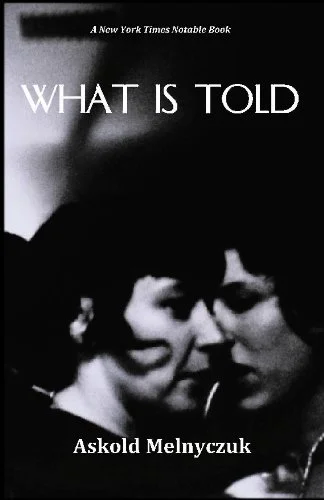
As to career regrets or mis-steps… Well there are some decisions I made then which I might make differently now. When my first novel, What is Told was published, a recognizable movie director (I really don't remember his name) called me and said he was interested in making a film of the book. I still remember telling him that I didn't want that because then the film would supersede the book and the book's real life was in language. I was also quite arrogant and riding high on a positive review in The New York Times, and I was sure every book would be equally admired. Today, I might have said yes to the fellow—but I'm not sure. I don't envy friends who have had successes in Hollywood. That's a world to which I've never been attracted—though I do love movies and many TV series. And the possibility of more time bought by the kind of money mass media offers was a temptation. Also, in the 90s, someone from The New Yorker called and wanted to partner with Agni on organizing literary events around Boston. But I worried about being subsumed by a much more powerful entity and so demurred from that. Who knows how things would have evolved had I said yes to those two, along with other possibilities.
Youthful arrogance and heavy drinking are not a writers' friends, and I've indulged both. But these are character flaws not inherently endemic to writing and writers.
LS: I’d personally be curious to see these highly limited-edition magazines from your childhood. And I must express my admiration for all the work you’ve done for others. You have an eye for spotting great potential in emerging writers, some of whom had their early work published with Arrowsmith and have since received prestigious awards. Romeo Oriogun published his first book with the press, and went on to win the National Book Critics Circle Award for Poetry. Mosab Abu Toha, recipient of the Pulitzer Prize for Commentary, first began contributing to Arrowsmith Journal in 2019. How does finding a writer to edit begin? What do you think gives certain writers an edge?
AM: One reason Agni and Arrowsmith have had the good fortune to help launch or publish early works by writers who became nationally known is because of location, location, location. I was fortunate to fall in love with Boston and move here soon after college. I went to Boston University because I specifically wanted to study with the poet George Starbuck, who himself had been a student of Robert Lowell's as well as classmate of Sylvia Plath's and Ann Sexton's. Boston had long been a central literary hub—along with New York and San Francisco. There was a lot of literary energy there—in part because of the universities for sure, but also because it used to be cheap. And in the late 80s and 90s, it became a hub for major international figures, including Seamus Heaney, Derek Walcott, and Joseph Brodsky. They, in turn, attracted gifted and ambitious younger writers. That was the period of the founding of The Dark Room, probably the most significant collective event for African American letters since the Black Arts movement of the 60s. A group of Black writers who attended James Baldwin's funeral decided to rent a house in Central Square in Cambridge and create a kind of commune in which they would support each other's literary projects. Its founders were my dear friend the late Thomas Sayers Ellis and his then girlfriend, Sharan Strange. Other members of the collective included Kevin Young, poetry editor of The New Yorker, Elizabeth Alexander, head of the Mellon Foundation, MacArthur winner John Keene, Major Jackson, poetry editor of the Harvard Review, Pulitzer Prize winner Natasha Trethewey, and two-time U.S. poet laureate, Tracy K. Smith, among others…
Poetry was in the air. Editing was as easy as going to a reading and the afterparty…
LS: I, too, have found it easy to fall in love with Boston, and all that it has to offer. Though I’ve spent only a small portion of my life there, it’s clear that the literary scene is palpable. I was recently reviewing an interview you had with another Massachusetts local, Tess Callahan, to whom you said that so much of your writing life involves “navigating the tension between what [you] think [you] should write about and that which wants to be written.” Can you tell me more about this?
AM: That's my way of agreeing with what John Gardner said differently: he described the process of writing as an ancient mode of thought. It is a way of thinking something through by using characters and landscape and language to feel one's way to some kind of an answer through the process of putting pen to page.
LS: And with this, we’ve reached the end of our interview. Though I do have one final question. You often tell your students that you prefer not to celebrate holidays and that, instead, you live every day as if it is a holiday. To you, what makes a day a holiday, and how has this informed how you live and write?
AM: William Blake said it beautifully: "Everything that lives is holy." Act accordingly.