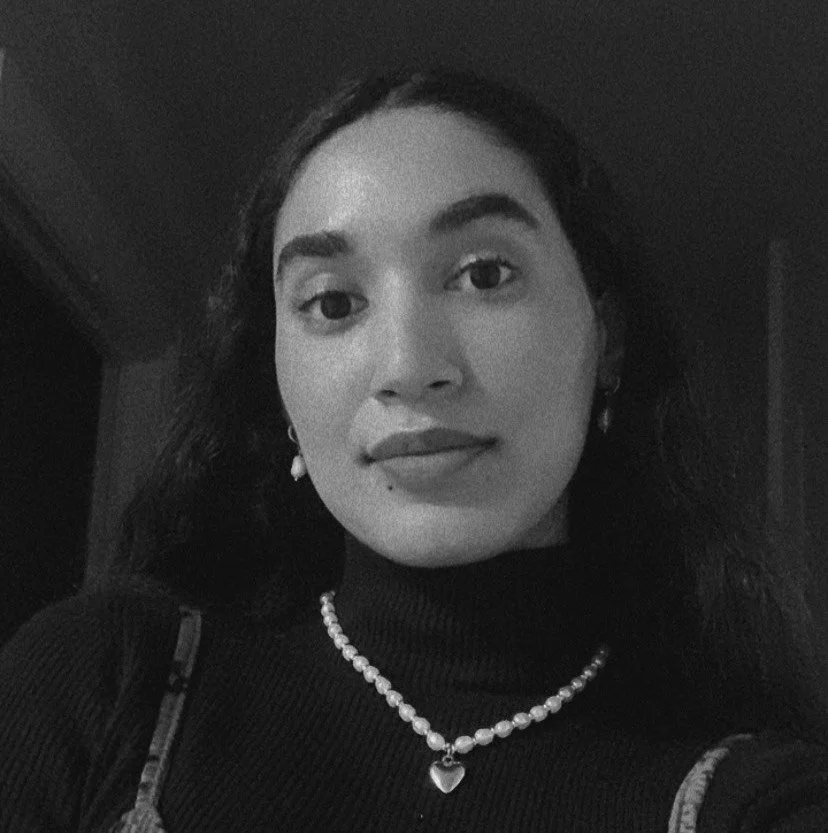
Interview: Aracelis Girmay
Between last October and December, I had the pleasure of speaking to someone I and a lot of my contemporaries consider a living literary ancestor—the legendary poet, Aracelis Girmay. She is a poet who makes works across genres and is the author of four full-length poetry collections. She is a professor of English at Stanford University and lives in the East Bay.
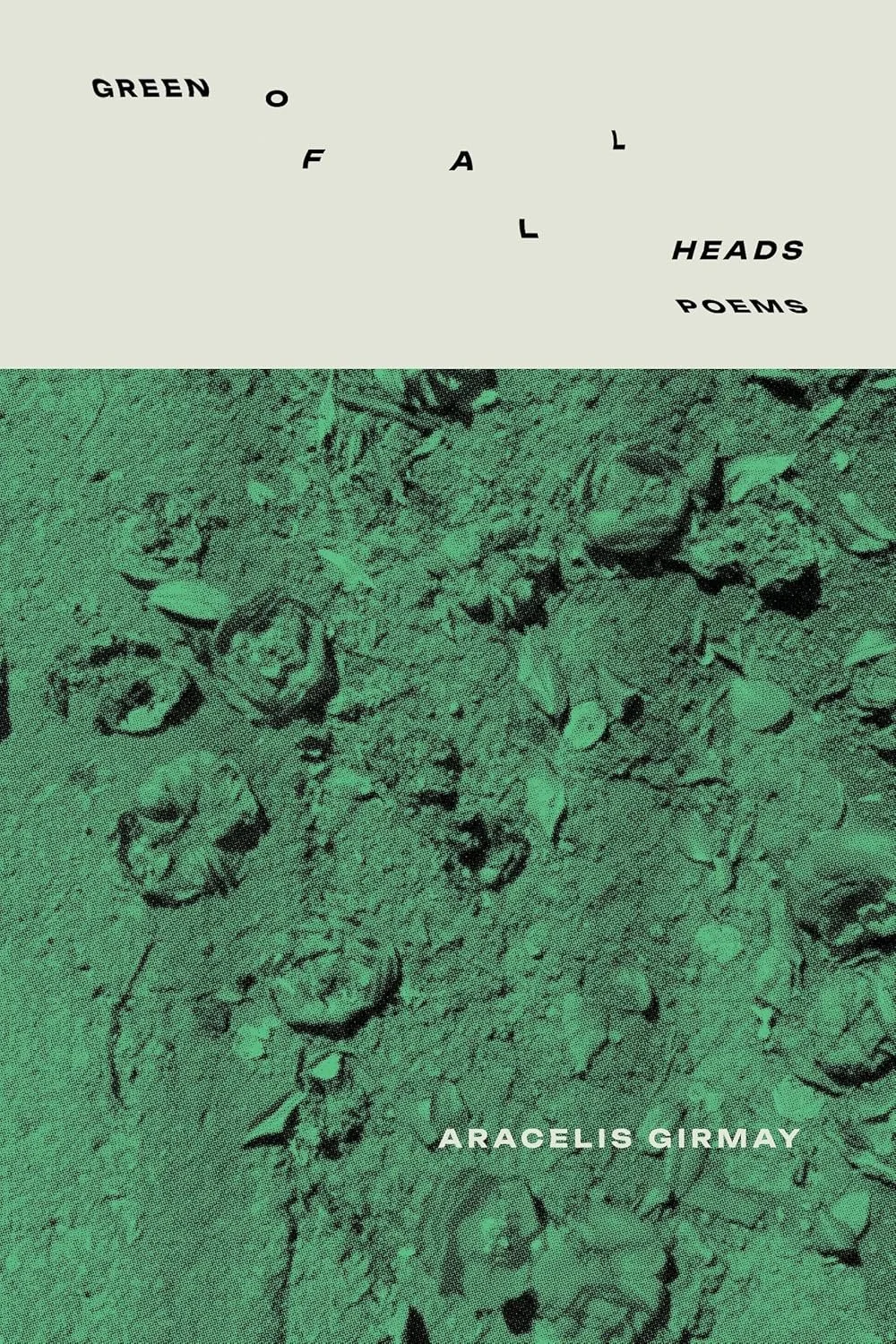
Months before our conversation I was lucky to receive an advanced reader copy of her latest collection of poems, GREEN OF ALL HEADS, and in preparation for reading it, I re-read her last three books which made our conversation richer, deeper, and spanning her entire oeuvre. Equal parts eulogy and prayer, GREEN OF ALL HEADS particularly spoke to me because of its exploration of mortality, where life and death overlap and continue with only a sheer curtain to separate them by investigating the space in which the tragic loss of a parent coincides with new motherhood.
The following is my conversation with Girmay discussing GREEN OF ALL HEADS, the root of poems, revision, memory, and grief. The conversation was conducted through a back and forth via email.
Hafsa Zulfiqar: GREEN OF ALL HEADS opens with the poem “December,” and the first line says “Or that I would run my hand along.” I’m fascinated by the idea of starting a collection with a conjunction where both the speaker and reader are presented with choice and agency. The poem also serves as a kind of epigraph to the entire collection. Could you speak about how the poem serves as a frame for the poems that follow, if at all, and what your decision process looks like when sequencing a collection?
Aracelis Girmay: This poem was one of the last poems I wrote that would be included in this book. There is an area of Coast Miwok, Huimen land that I've visited quite a few times—mostly in December—the two years we've been living in the Bay. Tonally and structurally this poem carries the sensation of being attuned to something there that disperses my thinking into scenes, bits of memory, seemingly stray thoughts. I became especially interested in trying to make or hear small, almost fleeting threads of music, some of which might have even been traveling a long time. Working on the poem I thought a lot about the geologic time of that land, its massive rock bluffs full of fossils, and touched my hand against its pre-colonial memory which reminded me of the multiple times and places I am and am carrying in my own memory, research, hair, and teeth. The poem is emerging out of all of that. To your question about beginning with “Or,” I was interested in the poem that very obviously begins outside of the poem and then moves along according to different orientations of mind and attunements to horses, mountains, ancestors, ground. And when the poem’s last words came or I came upon its last words—“To learn to stand outside the rooms of light”— I was very moved, surprised, and grateful for the darkness that they carried. I did not write those words but stumbled upon them when facing the trees and dusk coming with its heavy, dark saturations as it can sometimes. There is an instruction there for me, in the learning to stand outside the rooms of light, which feels useful and meaningful to me in so many ways. It is connected to being outside of one version of the world and in the deaths of the beloveds. It is connected to being outside of my life before children. There is also political will here—commitment to the exquisite potential of the outside. Being part of the unseen world or work and the sense and perspective that this teaches. Of course, the stakes of this are different for each of us at different points in time.
Your reading of the poem as a kind of epigraph to the entire collection speaks to my own thinking about it. The poem is unadorned, quiet, and is oriented toward multiple experiences of time at once. All these speak to a new threshold I was crossing in my language over the last several years. I worked and worked and revised these poems toward bareness in some cases—it felt as if I was over and over again washing the same stone—and in other cases toward jaggedness. But this poem to me signals the conditions of the new work more generally. From there, each section became an energy unto itself. In some ways, the book feels like one long, maybe unwieldy poem—a few poems don’t fit into that long, unwieldy poem, but not many. When ordering the book I was clear that several poems about my father needed to be together and after that was done, I loosened my grip. I’m interested in currents of feeling that can be taken up and then almost lost and then taken up much later and again (in a single poem and across the manuscript). This is the heart of the matter to me. How to be in the explicit presence of something and then lose touch and then find it again in a kind of different but undeniable way. And so much of the ordering had to do with extending, finding again, or losing these currents of presence and feeling across the book.
HZ: I love how the idea of return is echoed in the way you choose to sequence the poems in your larger works. I’m thinking about a poem in the first section of GREEN OF ALL HEADS called “Ceremony for Remembering the Doorless World,” where the speaker confronts questions of grief and memory, and comes up with a theory that grief perhaps changes circuits of relation and one’s sense of time and beloveds. This circular nature of grief, memory, time, and beloveds is excavated throughout the collection where one is always returning to the known and unknown simultaneously. What are some memories and wounds you keep returning to in your work?
AG: Yes, I was so shaken by this thing that started to happen to my spoken language after my dad was first sick, which, now that I’m thinking about it, might have also had something to do with my own new sleep patterns and lack of sleep as the mother of a new baby. As I write about in a few poems, I had begun mixing up pronouns and names but not haphazardly. There was a subconscious system at work that I eventually became really interested in though at first it just felt confusing and very sad. I don't think of myself as trying to return to memories or wounds explicitly in the writing, as much as that they are there, running beneath the surface of everything. Some I am more in touch with than others. I've always been concerned with a question of what is or could have been otherwise. Parallels, doppelgängers, sudden turns in the order of things. I think there are autobiographical reasons for this including the fact that much of my immediate family was dispersed by war. I cannot fathom what we lost.
When I think about the Israeli/US-ian genocidal campaign against Gaza and Palestinians I think about all of that relation and knowing that the IOF sets out to destroy. It is sickening. The depth of life and powers and wisdoms and histories of the world that these armies have tried to extinguish.
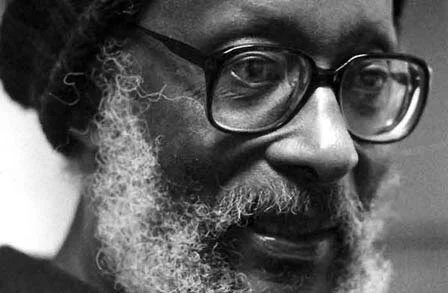
Kamau Brathwaite
Even as I am aware of the limits of a certain kind of recuperation, I am set into motion to trace the marks, to hear the sounds of those who move with an aliveness of care and integrity as their compass, which is to say: relation. Almost daily I think of Kamau Brathwaite in “Negus,” saying “fling me the stone.” He's talking about sharing power, sharing action, moving a strategy and energy across time. He wrote that decades ago but here we are moving objects across time. And the poem is one of the facilitators of that movement which is something I think a lot about.
HZ: Your response reminds me of the poem “Transmission,” in the second section of GREEN OF ALL HEADS where we travel from a scene at the local park to ending with “We are all of us here because of war.” It is one of my favorite poems in the collection and I think it embodies what you said about memories and wounds running as an undercurrent in your work. Parallels also make me think of what you mentioned earlier regarding being committed to “the exquisite potential of the outside.” I was reading an interview of yours in which you said you have an “interesting kind of outside relationship to language” and you were talking about Tigrinya, the language you inherited from your father, and how you were unable to speak it. The dominant language in your work is English but it is also the language that has been historically used to erase your people and so many other peoples. How do you navigate this tension and embrace the vast yet alienating space of an outsider? I’m also curious about what distance means to you in relation to being outside.
TRANSMISSION
In all the parks of our childhood, the coupling
of couples all flush, all long, all lost in
the other's mouth. Blankets -- emerald & gold --
& families with shoulders all same-shaped bending
in & out of the cooler. Watermelon.
Aluminum foil over Styrofoam plates.
We watched. Peripheral, coyote,
momentarily unmothered. Our father
on the field, running. We stayed all day
emptying out of swings, & sand
from the sockets of our sobbing
shoes. Hot metal slide while people posed in
pictures at the bleached, blue fountain
& by roses if there were. Our laces, burred.
A psychic eye of silty ice flashing cold
beside the trash. Silver pistol. A can of Crush.
Then dusk came covered the African heads
of Asmara, Kingston, Birmingham.
Long blur of mariachi trying to touch.
By now, some, the loved ones, come coming in the static.
Dandelion the brother, the sister air now.
We know three names. Our dead are
arriving. By now arriving & hovering
the black, yellow, green of the fruit of the radios.We are all of us here because of war.
Girmay, Aracelis. “Transmission,” from GREEN OF ALL HEADS, BOA Editions, LTD, 2025
AG: Yes, on my father's side Tigrinya and on my mother's side, Puerto Rican Spanish. But also Englishes of her upbringing in Chicago and of her family's routes from Pike County Georgia and Central Mexico. As Casey H., a brilliant poet and student I was lucky to work with at Stanford, said: “an abundance of sources,” and language-orientations. For most of my adulthood I lamented not being fluent or more fluent in any of them. As I get older, I am trying to be more focused and deliberate about learning Tigrinya but it is not lost on me that I've lost my most intimate teachers. And while this all is true, and perhaps because it is true, I have also come to feel how much more-than-English was carried into my English by loved ones. And so, while the terms of my English are bound to imperial and colonial regimes, they were not ever solely so. As I grow older I've come to think that all our lives exceed these regimes, even as we are utterly shaped by them. But this real fact and nuance does not settle what are to me some of the grave facts of our time. Studies and, perhaps, our lived experiences show that as is the case with biodiversity, the world's language diversity is also under threat. English continues to dominate the publishing market and, even in the field of translation, mostly white writers writing out of English-dominant cultures continue to be the ones making published translations, translations ferried into being by English. Cultural production in English continues to be one of the ways we are indoctrinated, subjugated, pacified, and paid. But there have always been people refusing these projects and reaching toward each other in and out of vast Englishes. In Decolonising the Mind, Ngũgĩ wa Thiong'o leaves readers with such challenging, vital ways of thinking about language and colonial alienation, language and imperialist distortions of reality.
To enter at a different angle: I am thinking of Lucille Clifton in the poem that begins “cruelty. don't talk to me about cruelty” in which she writes about killing cockroaches. She writes: “i took a broom to their country / / and smashed and sliced without warning / without stopping…” She later goes on to say: “now I watch myself whenever i enter a room. / i never know what i might do.” I think a lot about the suspicion with which she regards herself and I feel that this suspicion is critical especially when writing out of imperial centers (of place, of language). If and when I am disciplined, this suspicion can be part of an ongoing rigor and gift that my straining toward not only Tigrinya but all of these places and histories give my writing. To remember that language can be made more or less nimble, loving, capacious. And that such tendernesses have been lived in English, and are valuable in English, too. For example, here is heidi andrea restrepo rhodes in her languages (evident as English and also more than that): “in the book of eating clouds with kin, upon the heart of my mutiny, I am here.”
HZ: So much to think about here! I'm especially taken by the idea of regarding oneself with suspicion and keeping that as part of your toolbox when straining towards language and beyond. In another poem in the second section of the collection, “Perception Milk,” the speaker sneaks into their mother's belongings and finds items from which they “lift syntax eaten by moths” and after whom they “try to carve my word.” The poem made me think a lot about origins, roots, the space of borrowing, what a poem is shaped after and how it is shaped. It also reminded me of Mia Ayumi Malhotra's poem “Where Poems Come From,” especially because her new collection, Mothersalt, and the last section of GREEN OF ALL HEADS explores motherhood and birth. To that end, I'm interested in hearing more about the root of your poems–what are they? Where do they come from? How would you characterize them, or their concerns?
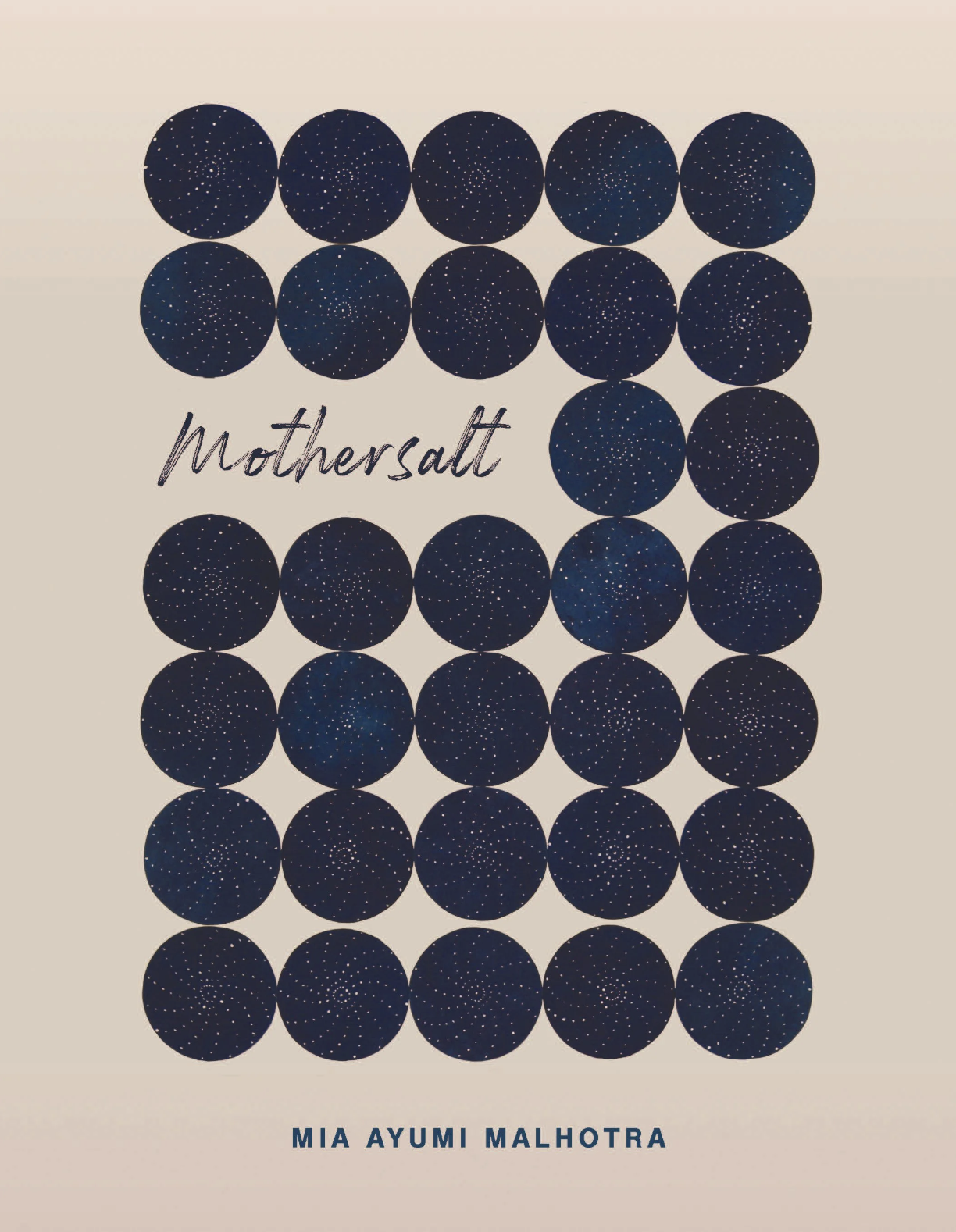
AG: Thank you for bringing Mia Ayumi Malhotra's work into this conversation. I am new to her poems and recently heard her read in San Francisco. I was moved to follow her thinking into the visceral, complex images and musics and silences of her poems. The exactitude and openness to the world. To your question about the root of my poems, I really don't think I know how to speak about it with exactness. A snatch of music that falls into my head. A color or image. A way of finally expressing a feeling, an image or scene (from memory or made) that allows me to finally access a complexity of thinking or feeling that I was having trouble accessing. Also, I have heard and witnessed so many moments, ideas, turns of phrases that are so fantastic and wonderful and enlivening and these are the details of the world that I carry and relive and remember and share with loved ones. So and so said this. I once saw a man on the 7 train dressed in red from hat to toe and he unzipped the top of his small red suitcase and pulled out a can of Coca-Cola! He took a sip from that red can and let out a big sigh, it seemed, so everyone would look at him. I never understood the roses but when you were little, there were these roses... The things I remember change depending on who I'm with and what their words, memories, and gestures touch in me. This is one of the ways that being in the world gives us access to the multiplicities of time and memory and world. The poet Linda Gregg, in her essay “The Art of Finding,” writes about the “resonant sources deep inside you that empower those subjects and ideas when they are put in poems.” And later: “provoking, instigating, germinating, irradiating--in the way the lake high up in the Sierra mountains waters the roses in far away San Francisco.” When I think about Linda Gregg's essay, I think of the great Nikky Finney who I took a really life-changing Cave Canem workshop with about 22 years ago. Nikky had us all, as a workshop group, read Audre Lorde's “Uses of the Erotic,” and I'm thinking about how in that essay, first presented by Lorde about 47 years ago, she is thinking about how one comes to care for and assert one's lifeforce in the hostile, violent racist and patriarchal structures of our times. I think so much about the ways she values, reaches for, scrutinizes, attends to this lifeforce, this resource, in her text. And I do think that my poems probably do grow out of those very varied things—pitch, darkness, memory, failure, snatch of music, small fly suddenly touching my life into life, theory—that charge me into life in a way that is particular, complex, strange, indomitable.
HZ: Your work is so deeply rooted in African-American and Global South traditions and yet it’s hard to pinpoint the root of your poems, perhaps, because they run so deep. You mentioned Nikky Finney and Audre Lorde serving as literary inspirations and companions. The long poem “Sibling,” ends with the lines “My brother breaks his small dictionary in half / and gives it to me like bread when I thought I was alone.” Reading those lines I wondered about who your literary siblings are both poets/writers but also other creatives e.g. the artist Belkis Ayón is someone who you often converse with in GREEN OF ALL HEADS. Similarly, another long poem in the collection—“Your Words Again”—which is one of my favorites especially because of its experimentation with form, the speaker is in conversation with elders who have crossed to the other side, made me wonder who are the literary elders you’re trying to converse with in your work. I’m also thinking about our past and future selves in relation to this and what kinds of conversations you hold with them.
AG: I am definitely in ongoing conversation with my dad who would not think of himself as a literary elder but whose precision with, and expectations of, language have meant so much to me since I was young. Other writers whose work has touched my head open and whose strategies I'm writing after in this book include Kamau Brathwaite, June Jordan, Paul Celan, Lucille Clifton, Theresa Hak Kyung Cha. The way they carry all things in the work, all things being connected, making zones of relation that illuminate something about the world. Also, Teberh Tesfahuney, who has a few songs that I listened closely to with my dad in a kind of study of feeling and translation. Toni Morrison's question from A Mercy: ...can you read? I'm not sure that I am trying to converse with them as much as they have made some of the world that I dream and work and move in. I am ever reading their work, thinking alongside them, trying to read... and particularly so in this new book. As you say, Belkis Ayón's work was inside of me from the moment just before I turned to face it. It was the guava color, the pinkness of "La Cena" that I perceived before I really began to see the rest. It felt like an evocation. I was about seven months pregnant when I first saw that collograph at Bellas Artes in Havana. I was stretched and doubled and tripled and perceiving, it seemed to me, so much from my center and from my skin. I could not even begin to pretend that I was just a head or pair of eyes, or that I was not all of me. I think this all has something to do with the degree to which the image(s) entered me and stay with me so deeply now. As do her questions about transgressions, social memory, and the female subject. I saw her retrospective at El Museo a few years later and then visited with one of the chivo collographs again at the Venice Biennale and continue to learn so much thinking with her, wondering with her. Reading Dionne Brand (from A Map to the Door of No Return to At the Full and Change of the Moon, her readings have sharpened and opened my reading with Ayón). I also want to mention that Ayón also does something that feels similar to what happens when I read Robin Coste Lewis's work, which is that the time (and space) scale dilates, adjusts mark to mark, a handkerchief informed by the scale of millenia. This touches, for me, the work of Agnes Martin and also the strange, ecstatic thing that a note can be when I am listening to John Coltrane or reading Christina Sharpe. Kamilah Aisha Moon ("you remain evergreen / & ours"), Ama Codjoe, Patrick Rosal, Ross Gay.
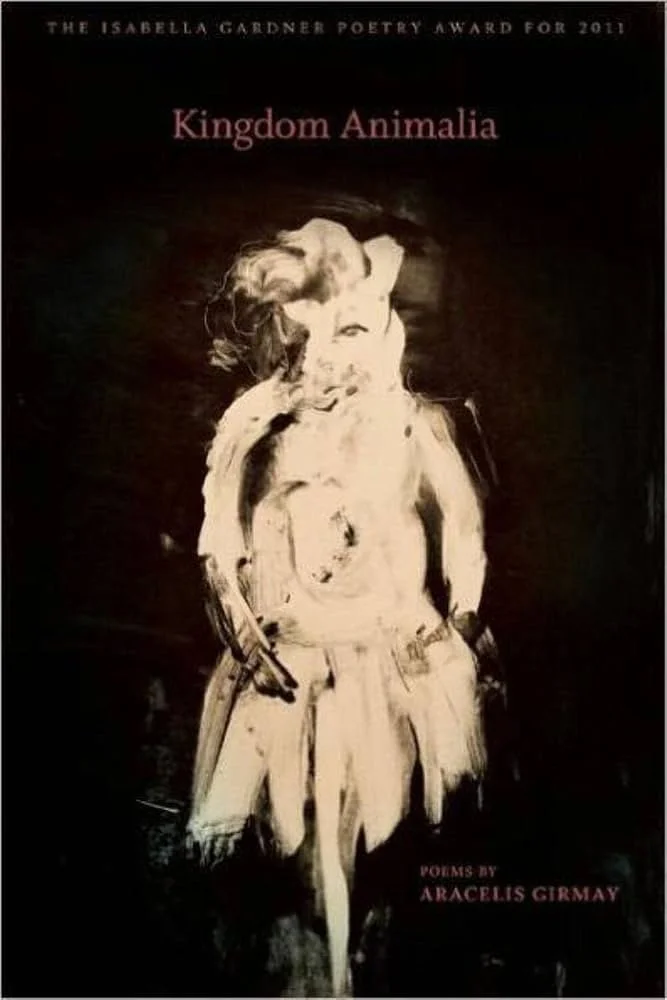
HZ: Thinking about future and past selves, I re-read all of your previous collections in preparation for reading GREEN OF ALL HEADS and it was eye-opening to compare my reading notes for Kingdom Animalia from 2019 when I first read it in a poetry workshop at Bennington College and the notes I made reading it in the quiet of my parents’ apartment in Karachi this past August. How is your experience when you reread your old poetry, what kind of emotions does it evoke? I’m also thinking about revision here, are there poems you wish to go back to and change or excise completely from collections they are part of? How do you generally approach revision, are there certain steps you take or every poem has its own unique journey?
AG: I thank you for reading my book in the quiet of your parents’ apartment in Karachi and also at Bennington. How special, the ways we carry each other's words out into other breaths and places and interiors attended to by family, loved ones.
This is an interesting question. I have heard stories of Galway Kinnell reading poems at events with a pencil in his hand, revising as he went along. I don't know how often this happened or if it just happened once, but I love to think of the scene for so many reasons. The notes made in pencil. Kinnell using pencil to edit the printed ink. In real time. I heard the story decades ago and now don't even know if the person who told me the story said he used a pencil or if that's what I imagined. In any case, I'm interested in a poem not letting you go, several years later. That you could read it again and feel compelled, suddenly, to keep working on it. That interests me and has happened only rarely for me, probably because I've already read it so many times and for so many years, that it is hard to hear its other potential musics. Also, there are other things I want to be working on. Also rarely, but more often: I will change a word, or take a small phrase out of a poem I wrote years ago. If I were to want to revise a poem I wrote years ago, then I would. I don't think that publishing work then fixes the poem or my relationship to it, though I should also say that it often does settle something for me about the poem... which is a slightly different thing... If I were to make a book only using the poems in my first book, the book would be very different from its current version. There are poems I would take out, and change. Its order would likely be different. But I am so different. And I'm grateful for the opportunity to have a relationship with a multiplicity of selves—in poetry!—over decades. I read and reread the poems of others far more than I read my older work, and when I do come to read my older poems (and even these from the new book), they feel written by a stranger that I am also somehow intimate with. Like seeing a stranger on the train and feeling like I recognize them, but I don't know in what way I am feeling or even thinking about the recognition.
As for revision, there are certain things I always do: I always read the poem out loud, across the drafts. I read to myself and then to my partner, feeling new things in these listenings. I note what feels true or untrue, what feels like mud to move through. I track the energies, what enlivens my thinking and what feels dull. I circle and revise for diction, lately (but maybe always) choosing words that are most daily, bread, and stone. I used to always draft by hand and then print and then draft by hand again, which often helped me to pay attention to the music of the poems and the kind of imagistic possibilities of a line without at first being driven or influenced by the formality or evenness of typography and page. When I am very busy, I realize I do this less now, and go straight to the computer but this is a loss, I think. Meaning, there is great value for me in retaining the shape and process of a thought outside of the machine. From there, though, revising each poem is its own study, shaped by what I'm learning, reading, and the questions I've learned to ask. What about you?
HZ: I’m still figuring out my relationship to revision—I have been mildly trained to revise as I go, which has lately started to feel burdensome, especially when I think of how I don’t have true first drafts anymore. You mention Galway Kinnell and his fascinating story about revising while reading at an event, are there any other notable stories about or experiences meeting poets you admire?
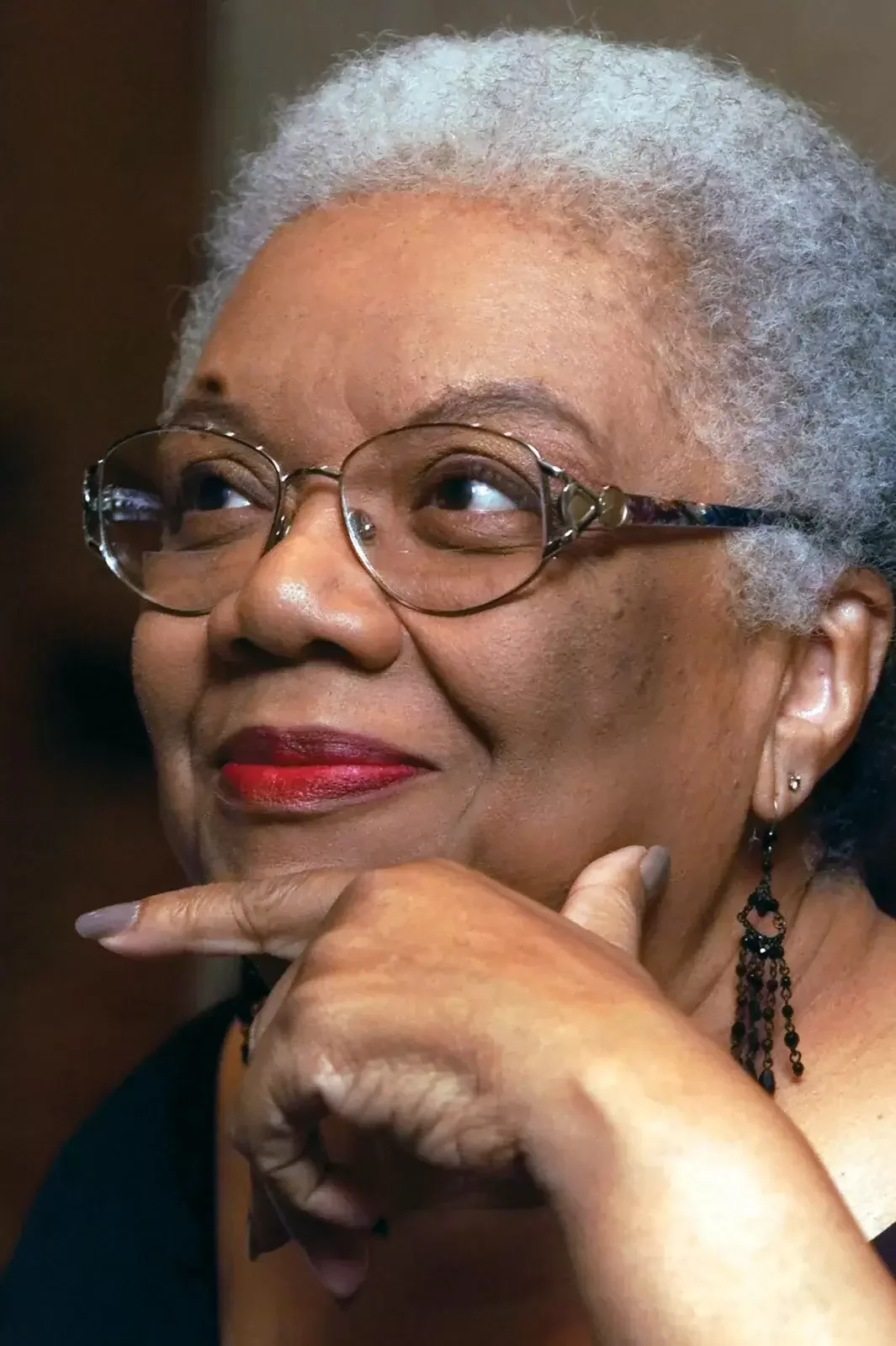
Lucille Clifton
AG: That is so interesting. And perhaps good, useful information that it's starting to feel burdensome—not that any of us are on the same page (even with ourselves) on what to do with a burden. I probably also revise (especially my diction and syntax) as I go, but then, perhaps more drastically, draft to draft. So many choices change and become differently available to me depending on the word or music and I often need that word or object or syntactical (dis)orientation to move into the poem's next plane. As for notable stories and experiences with poets I admire. Yes. So many. I wouldn't know where to begin. But a memory I am ever with is being in Lucille Clifton's papers at Emory (an acquisition that poet Kevin Young, in conversation with Clifton's family, made possible). I was visiting those archives with my very dear friend, the beautiful teacher, poet, and essayist Kamilah Aisha Moon. And among Clifton's revisions that we got to see unfold in those papers was her work on the word "possible" in a poem, and she moved it through some different word choices and finally chose the word "black." I love to think of that revision and have written about it elsewhere. It's hard to say how she thought of this revision, but I'm interested in the potential relationship for her between "possible" and "black." Another thing that happened in those archives is that together we came upon this poem "to black poets," and you can see the original in a photo that Aisha took in her wonderful piece “Visitation: A Poets' Gathering.” The poem goes:
just cause you don't see me
don't mean i aint there.
when you be together
reading
and being together
and you feel something soft
rubbing you just like sisterskin
dont turn off please,
thats me.
We were both touched immediately, feeling and knowing the power of her speaking to us. I think of these lines all the time and through them hear Clifton and hear Aisha and hear my father and the presences, too, of the others whose names I do not know but who are with me.
HZ: I believe the publishing world has changed a lot since your first collection and there is a bigger focus on marketing and publicity than ever before. As a poet who has been writing for a long time do you think about your, for a lack of a better word, brand? Do you distinguish this from your ‘voice’? Have you experienced a metamorphosis of some manner in your poetics because of the way the industry has changed? I’m also interested in knowing more about how you approach your relationship to audience and if there has been an intentional shift in that over the years.
AG: So much has changed and there's so much I'm thrilled about. There's such a range of work being made and being published. There continues to be so many different kinds of strategies and practices for publishing and sharing word in pamphlets, zines, magazines, chapbooks, on stickers, postcards, walls, in books, at open mics, and in bathroom stalls. All of that is going on even as it also feels true that the pressures to conform are also real. And the pressures of professionalization and careerism seem to me very different than all of that seemed, at least to folks in my circle, twenty years ago. I don't want to generalize, but I think the books, advances, and big awards and reviews seemed kind of unimaginable for so many of us when we were first finding each other and studying and sharing work, and so, though we wanted certain things, we were still operating semi-outside of it. I had an MFA but I went for the wrong or right reasons... I was bewildered by poetry and felt I needed training in how to think about it, and that that training would help me to understand how to tell stories and make longform nonfiction, among other things. I went into debt not having a path for a job and not knowing anything real about paths to publishing, etc. But now we access our information differently and have greater access to the paths and insights of others, for better or for worse. And there are so many poets doing all kinds of things and finding support for those things, and I think that's great, but with that can definitely come a kind of new pressure on the work, on its reception and one's expectations for the work and how we come to gauge what we're doing and how we feel about it. I imagine those pressures might be immense for anyone, especially someone young in their work. It seems essential—for the writing and one's health—to find a way to protect or hold onto yourself well in all of that. To think in terms of brands and one's particular voice seems to me dangerous, like you can fix yourself and in so doing, wound yourself. In a deep way. I try to listen truly to where, for me, the lifeforce is in the work that I am trying to make and it's happened that some of my poems feel so different from each other in certain obvious ways. I felt that with my newest book of poems I was listening toward something much quieter than I was in the last books, something more mutable and humbled and bare. And I did—do—feel worry about it, as though I might let down anyone who read my work before. But also, I feel the strength and joy of making a true thing. A thing I find very true and representative of the emotional textures, instabilities, and formal concerns I've been working with these years. In a way (and as maybe you already know since you carried these poems together in one basket), this answers your question about audience. I have read very few of these poems out in the world. The poems from the other books were poems that I read out (at poetry readings, etc.) so much. And I think I learned a lot about what I'd revise based on how I felt reading them out loud to others... noting where I became disinterested and trying to understand why, where I felt enlivened, and why. So there's a way that those first books are shaped by poetry readings in a different way than this one is. But besides that, so much of my relationship to possible readers has felt the same from my first book to this one. I share the manuscripts with loved ones or colleagues and am grateful for any impressions or close readings. These loved ones are among the people I think I am always writing with and I know that just knowing they are out there deepens my courage. The page—“blank” or full of words—is an intimate place for me. I didn't try to make it so, it has just always been that to me and so I write with and alongside those with whom I feel close (across time) and that's always been so.
HZ: What do you enjoy most about being a poet and what would be some words of advice you would give a younger poet trying to figure out their voice?
AG: Advice is so particular and I'm not great with advice anyway. But what I keep trying to remember is that all the ways we speak and all the language worlds that move through us are with us and it's interesting to think about the ways that they do and do not cohere. There's life in that, I think. And I'd say read widely and deeply, across languages and century, field, in and out of translation. It's wild to think about the extent to which the pressures of markets and schools can sever us from the intricately tangled riches of our actual educations. We are taught to account for learning, endeavors, and relationships in unimaginative ledgers. It is an ongoing difficulty for me but I am trying to remember to hold on to and protect all that tangle.