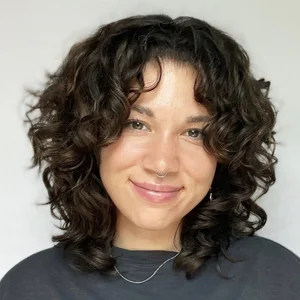
Interview: Liza Losada
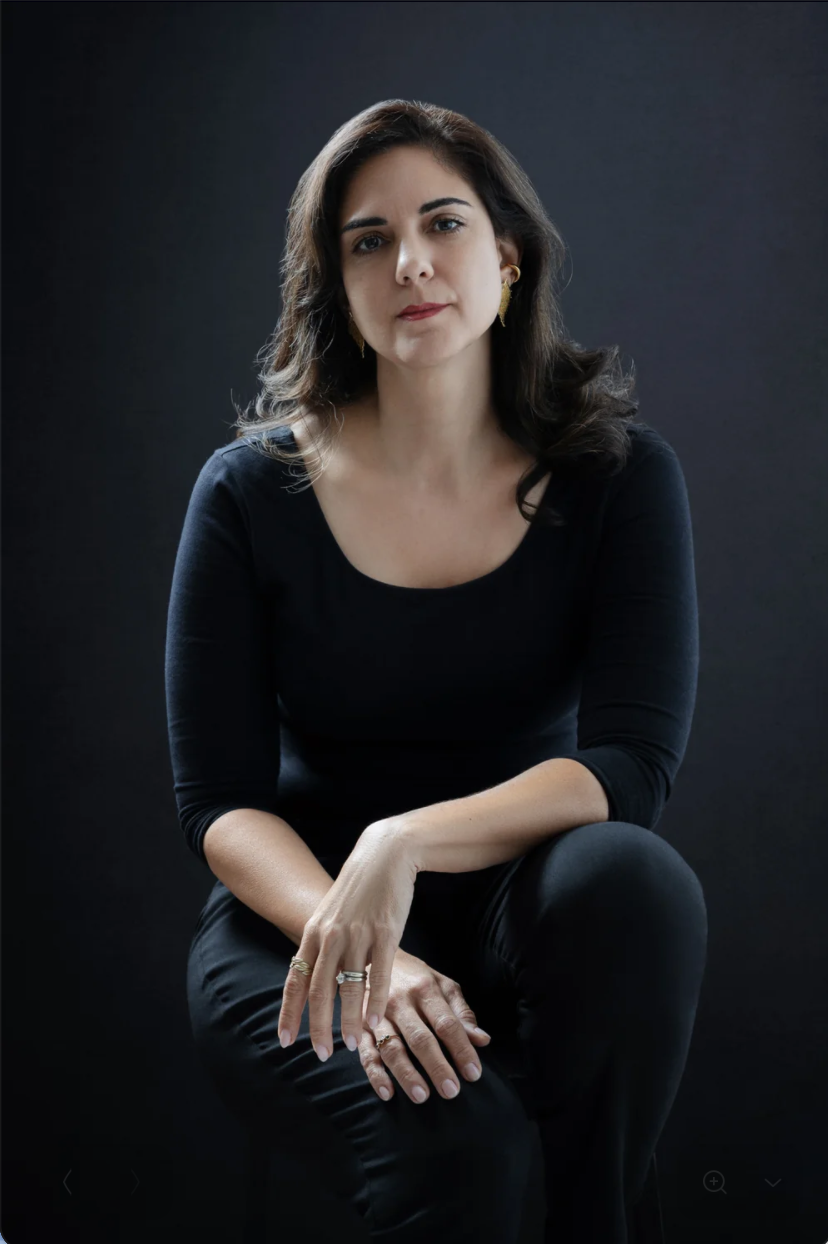
Liza Losada is an advanced practice nurse psychotherapist specializing in post-traumatic stress disorder and adolescent psychology. Ink Honey Blossom is her first published novel.
Em Setzer: Do you want to talk about yourself first or about the book?
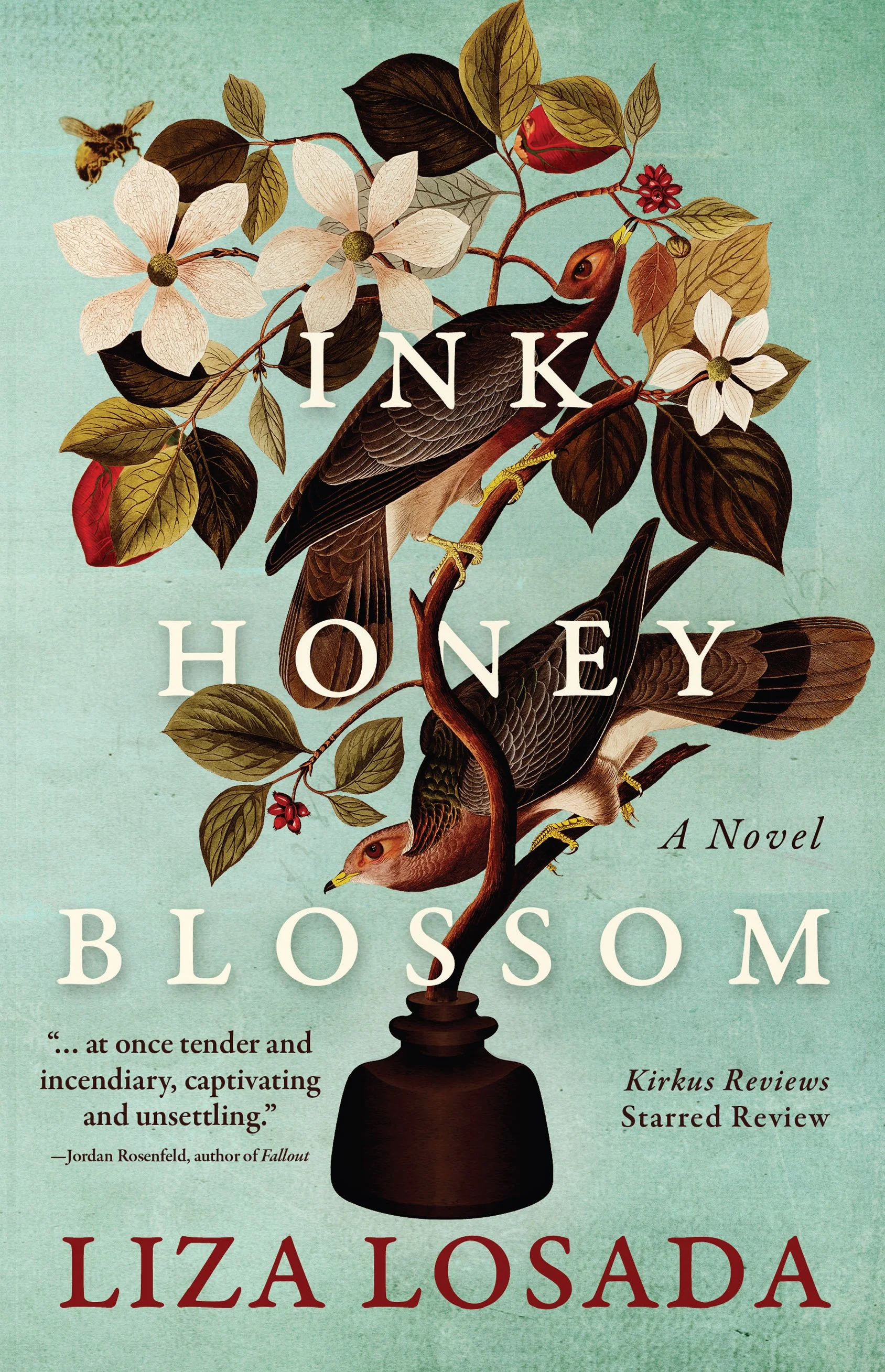
Liza Losada: Let’s start with the book. Ink Honey Blossom was born during COVID. We were in lockdown, and I was reading about the Kula Ring, which is a gift economy in Papua New Guinea built around necklaces that have value simply because of the value people give them.
That's when I thought, I would like to write a story around a magical object, a necklace. That's how it started.
I'm also a nurse psychotherapist and a psychedelic psychotherapist and have worked in research that studies the use of psychedelics for the treatment of mental illness. That was another source of inspiration because I love writing about altered states and trances and the potential power of psychedelics as healing medicines for suffering.
After that, the book took over. Once the characters are born, they tell me what to do. Even if I like it or not, I'm going to do what they say.
ES: I’m embarrassed to say it took me until at least two-thirds of the book to realize, "Oh, this is essentially the hallucinogenic work you do with your patients." I think it was when Ink says something about how a trance isn’t necessarily going to show you what you want to see, but it's going to show you the things you need. Then I thought, "Ah, okay. I'm putting two and two together."
LL: Yes, that idea comes from psychedelics.
ES: So Ink Honey Blossom is currently being marketed as dystopian fantasy. Having read it, I would describe it more like magical realism set against a dystopian future. It's more or less set in our world, with some magic elements, and obviously in a different timeline altered by the arrival of the Blight Plague, eight hundred years prior to the book’s start.
Regardless of whatever label we're applying to it, the book clearly engages with genre. I'm very interested in the position of genre fiction in our contemporary literary space. Genre has occupied an uneasy place with both literary institutions and the culture around writing and publishing.
I'm curious what it was like to write, publish, and market a genre novel at this particular cultural moment. Did you find yourself thinking about genre conventions or audience expectations while you were writing, or did those categories become more relevant after you finished the book and started marketing it?
LL: Thank you for how you described it: "magical realism set against a dystopian future." I think that's one of the best ways to describe it because it’s not really fantasy, it’s fantasy-lite. When people try to market it as fantasy, we run into trouble.
It's impossible for me to write anything that doesn't have an element of fantasy, magic, and altered states. Those are things I always put into my books, so I know I'm going to land in genre fiction regardless of what happens.
As for the audience and conventions: when I was a kid, I had very little access to books, much less fantasy books. On the rare occasion when I encountered women in fantasy, the stories often centered around rape-and-revenge narratoves and few female fantasy protagonists. I always wanted more.
So I fell into the trope of writing the book I wanted to read. That's where most of it came from. I didn't set out to write genre fiction, but I did benefit from people who explicitly teach the rules of genre fiction. Thinking about the rules of the magical system is critical. When you have a tendency toward metaphor, like I do, you have to be careful about how you’re introducing the magic of the story. You have to be strict with yourself about what the rules are.
ES: The magic of this story is centered around hallucinogen culled from the bark of a tree which House Girls use to guide Blights through meditative, healing trances called SonaScapes. What were some of the explicit challenges of coming up with this system?
LL: Again, I had to figure out the rules. How do you enter the trance? How do you leave it? What kind of control and power does the person catalyzing the trance have? Does the person experiencing the trance dream state have awareness of the person facilitating?
Does anything physical change in the person other than their health? Since every trance makes the Blight customer healthier, they might actually leave the room looking healthier. But aside from that, they don't physically change, and the setting doesn't change. This is all happening inside two people's minds that are connected.
ES: You mentioned having teachers of genre fiction. Somewhat related to the literary-versus-genre-fiction divide is the MFA-versus-no-MFA discourse, or just the way people become writers in general.
You don't have an MFA. You studied literature in college, but then focused more on the therapeutic pathway for your master's and have been practicing as a nurse psychotherapist for 25 years. You've put a ton of time into that aspect of your identity while also growing your identity as a writer outside the traditional pathway.
What are the ways in which developing your craft outside an academic writing environment has shaped your work differently than if you'd had a more formal writing education? What do you think the amount of lived experience you're bringing to your writing has taught you that you maybe couldn't have gotten in a classroom?
LL: Starting with the MFA versus being self-taught, I think it’s just whatever gets you through the dark night.There is tremendous value to both paths. Some might benefit from a more predictable structure to produce work. I was almost forty when I started writing novels and I feel I had a fair amount of self-discipline. I didn't have the space in my life or the intention of being in a class that didn’t involve a leotard or a glue gun. But I wasn't in a void, either. I had writers' groups, beta readers, and people who would say, "This is really not working." This was very valuable.
But being outside a structure like an MFA program gave me the space I personally needed to take risks which I might not have done in a classroom.
ES: You mentioned arriving at writing with a good amount of discipline. Would you say that is a by-product of your line of work?
LL: When I was doing floor nursing, I worked long shifts where there's a lot of watching and waiting and letting the process unfold and then responding to it, but also anticipating it. The same can be said in psychedelic research when you sit with someone having their experience. Sometimes you're sitting with someone for eight hours at a time. My role is support and safety. A lot of the time, it requires just sitting quietly.
So there's a lot of discipline involved in that, too. Sometimes, I don't even read. I just want to hold space.
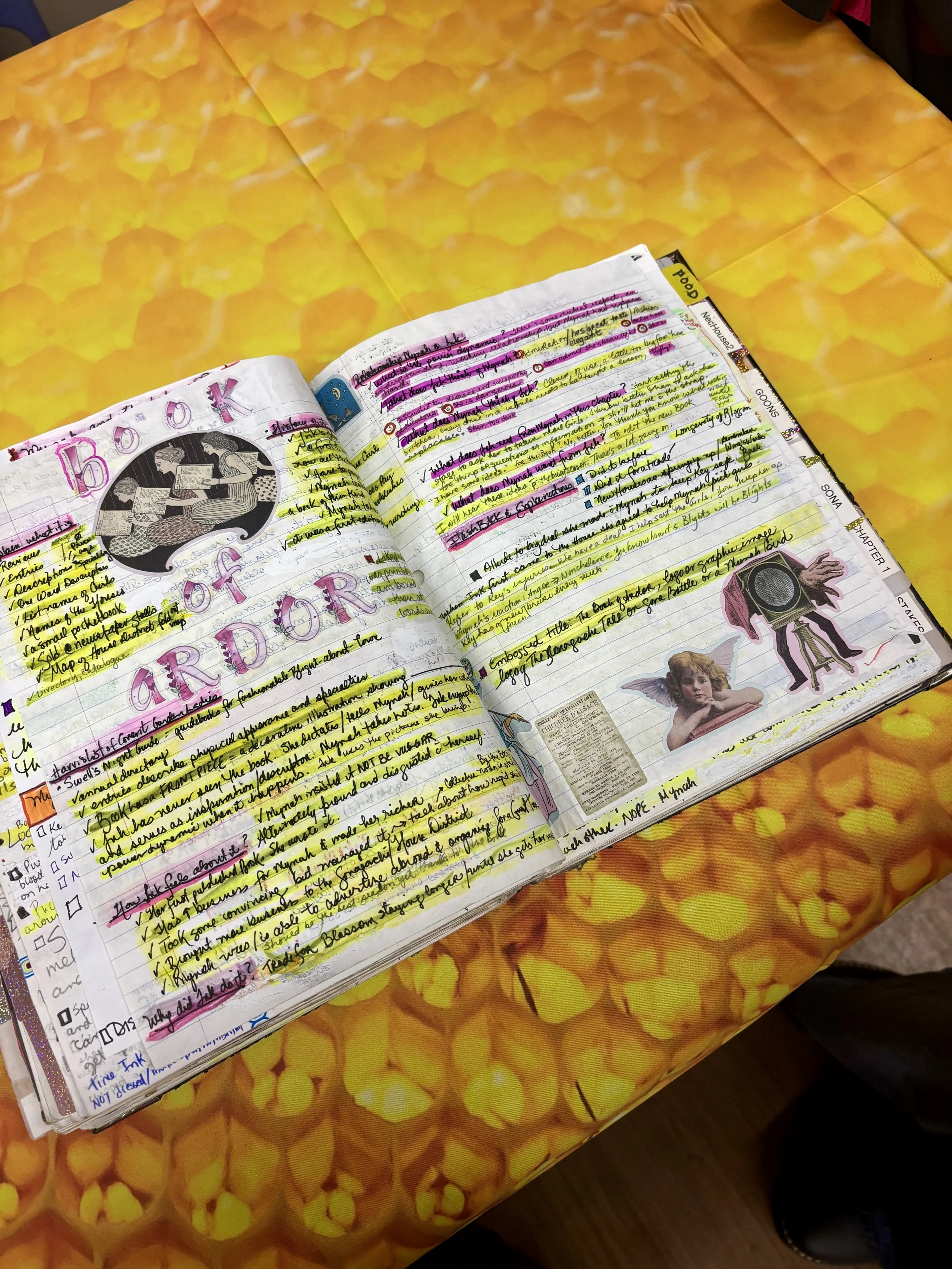
Losada’s “Bible,” a notebook of planning/inspiration she made while writing the novel
I also treated writing like a job. When my son was at school, that was my time to write. Three days a week, when I wasn't working as a therapist, I was writing. That was the job.
ES: Do you think publishing a book will change your writing process? Do you think anything will creep into your process now?
LL: I don't think so. Ink Honey Blossom is the first book I've published, but it's the second book I've written. The goal of Ink Honey Blossom was to make it shorter than the first book, more accessible, and not as weird. That was a failure because I get weird really fast.
Will publishing change my process? I really don't think so, because the sheer pleasure of writing it wins over the pleasure of publishing it a thousand times so I look forward to doing it all again.
ES: The world of the book feels very untethered from any particular moment in time. There are occasional mentions of television or cars, but not many. By nature of how contained the book is, taking place in a single cloistered setting (the Nectar House), the narrative is kept even more secluded.
Was this temporal ambiguity intentional?
LL: Yes and no. I was careful to give the reader certain signifiers. Within the first six or seven pages, I use a metaphor about astronauts circling the planet. I wanted to tell the reader: this is a world that has space travel; this is a modern society. I do make a reference to a famous science-fiction movie. Some people have gotten it and some haven't. I wanted it to be a parallel: this is a world where this famous movie could have existed alongside this world that has been almost completely demolished by a terrible pandemic and food droughts long ago.
I was also intentional about not making it culturally specific. It was inspired by the Sonagachi red-light district in Calcutta, but I didn't want to associate a real culture with fictional characters’ problems or stigmas. I didn't want it to take place in, say, an alternate-future-India or South America.
Instead, I use things like food as a way to reference culture. I wanted to show that the sex trafficking happens all over the world so I took foods from many different places because this is a global situation. The food mentioned was from all over the world, particularly areas of high sex traffic. Horchata and corn-based foods from South America, lentils from the Caribbean, sorghum from Asia and Africa. So I was more intentional about giving these cultural signifiers and clothing than temporal ones.
ES: My next question is about the Blights. I'm obsessed with the Blights. I imagine it's hard to come up with something that feels fresh or inventive, but I think you do so with the avian qualities of the sickness; the growth of a hind toe, huge “pigeon” chests. I'm curious about how you developed that!
LL: First of all, I love birds. Birds can be beautiful and menacing. You should be afraid of some birds. Cassowaries can kill you. I visit the one at the D.C. Zoo all the time. Even a little sparrow, if you take the right picture when it's eating or protecting its young, can be terrifying.
When I was a pediatric nurse, I worked on a respiratory ward and took care of kids with cystic fibrosis. This illness makes it very hard to breathe, and people can get what is described as a barrel chest, much like a bird’s. That also helped explain the association with birds; birds have large chests because of their strong flight muscles and their efficient respiratory system. I wanted the illness to be a respiratory illness because I wrote this in the midst of COVID, and people who struggle with illnesses like asthma know how scary it can be to have difficulty breathing.
There's also the idea of being caged and being free. That's a more obvious metaphor
ES: Another curious aspect is that only men can be infected by the Blight. Women are only infected if it’s passed down to them by their fathers, and even then they’re only “Half-Blights.” How did you arrive at this sex-linked nature?
LL: I knew very quickly that it was going to be an allegory for sex trafficking. I was trying to figure out who the bad guys in this system were.
I love working with the ambiguity of women in power and how they can be villains in their own particular way. I wanted women to have the disease, but I didn't want them to be in the same dire straights as the men.
So many diseases and illnesses come with stigma. I wanted to play with this idea. Because so many men have the disease, including powerful ones, being sick was made out to be special and lauded. That's why, in this setting, birds are sacred. Thousands and thousands of poems are about birds. They're all over the clothing and in classical literature. I wanted it to be a world where, if Van Gogh existed, he would have painted a lot of birds.
I wanted it to not be shameful to be sick so it's actually cool to be a Blight. It's not so cool to be a woman in this society, so I only gave women half.
ES: I also wanted to ask you about names. Obviously the title, Ink Honey Blossom, is three of the characters' names put together. But names throughout the book carry tremendous significance.
The girls in the House are stripped of their birth names and given names tied entirely to the roles they're forced into (Ink is an Ink Girl, for example). What drew you to naming as such an important concept for this novel? And how do you think the relationship between a character's given name and their sense of self is enacted throughout the novel?
LL: Yes, that's very intentional and an example of when I do write for the reader. Who will encounter a protagonist’s name so many times, so it has to sound nice to the inner ear. I ask myself: what would the reader like to keep hearing over and over?
For example, I love M words. Like with the procuress of the House, Mynah. Her name is such a beautiful word. It's like a breath: Mynah. It’s also obviously a bird, so a lot of women who are half-Blighted are probably going to have bird names because bird names are a big deal. It's another way to elevate the status of Blights.
Stripping someone of their given name is a way to dehumanize them and reduce them to the role they play in society.
ES: In terms of coming up with the names the House Girls would be given, were there other variants of Ink, Honey, Blossom, Apple, or other types that you played with but didn't use?
LL: I was careful not to get too fetishistic. I didn't want to sexualize them, even though this is an allegory for sex trafficking. I was considerate of the reader's emotional safety because everybody has different comfort levels with this kind of trauma, which is very powerful.
Another thing that inspired the book was the Devadasis. They're ancient temple dancers who were completely devoted to the temple and were considered sacred beings. So I had a House Girl who was a dancer, but I think I took that away because I didn't want it to be sexualized. I wanted it to be sensual, but not sexual.
ES: You mentioned straddling a line between doing justice to a very serious and brutal topic while also thinking about your readers. The allegory for sex trafficking is undeniable. It's clearly something you set out to do, and you do it very well. It's present throughout the book, but the book itself is very sexless. There aren't many mentions of sex, and there's almost no explicit sexual content.
How did you navigate that while writing? How did you strike that balance?
LL: In the middle of page two, I say that it is taboo to touch the House Girls. Very early on I established that as part of the culture: touching a House girl is extremely forbidden.
So I made the Blights a very superstitious lot, centuries of tradition taught scared them into not touching because they believed they'd become even sicker. It was also an offense punishable by law.
I'm not out to shock anyone. The readers have to trust me that I will keep them safe inside the story.
At the same time, I wanted to tell a hard story. The audience needs to be comfortable enough to read the story, but still be exposed to the horror of the situation. The actual experience of the SonaScape is also a violation. I've worked with trauma patients, including sexual-trauma patients, and it's not only about physical violation. It's also about mental violation. I wanted to show how traumatic this is by comparing it to the trances House Girls facilitate.
ES: I really wanted to ask about resilience, because I think that's one of the things that distinguishes the book from stories that use trauma simply for shock value.
LL: Resilience is a big theme in the book. Not big bold gestures, but the small things people do to hold on to their humanity, the things they cling to in order to survive something hard.
More importantly, how do relationships help you survive something that feels unsurvivable?
To me, it's less about abuse and more about resilience in the face of horrible situations, and how everybody is going to do it differently. That's why I wanted to give all the Girls something that was special to them. Ink has scratching words on the wall, Blossom has her chess,etc.
That was Bird's gift to everybody: find that one thing that will help you get through it. It doesn't matter what it is. Everyone is going to have a different take on it.
ES: Bird is a House Girl that we never actually meet. Was there ever a version of the book where she had more of an active presence, or did you know from the beginning that you wanted to keep her out of it?
LL: No. The most she got was a flashback. That was all I was ever going to give her. Also, good guys are hard to write without getting cliche and sappy. It was easy to write Mynah, the villain. Villains are so fun to write. They also have the best clothes.
ES: I think it's also more believable that someone is pure and good because they’re being remembered in a biased way by other characters. I think it's a very smart way to do it.
LL: Bird is more of an idea than a person for a lot of the Girls.
ES: The book largely takes place not only in a single place, but within a single room. It's an extremely self-contained narrative. It creates this interesting tension between the physical confinement of the narrative and the expansiveness of the world and histories you've developed.
What drew you to such a contained setting, and what were some of the challenges of sustaining a novel within such a confined space?
LL: The lives of people who are trafficked are really quite small. Very often, they're confined to the rooms or houses where they are being exploited and not allowed to leave for months at a time.. A lot of these people's lives are within a few rooms. It can be maddening and claustrophobic. That's one of the things that's very harmful is the lack of stimulation. Something I have learned from working with exploited children and adults and doing my own research is that the lack of stimulation is very harmful. They spend a lot of time in places with few windows and are very isolated even from each other. Exploiters keep people separate on purpose because when people can talk and unite, they're harder to control and subdue. They're easier to scare when they're alone.
ES: And what about the challenge of sustaining the narrative?
LL: So hard to sustain a narrative where the characters are not in the same room. I got away with it a little bit with the House’s courtyard and windows. The courtyard was a lifeline. It was modeled after my high school, which had a beautiful Spanish courtyard with trees in the middle.
Mobility was another challenge. I came up with the idea that only Inks, Honeys, and Blossoms are anchored. In the other houses, the Girls can move around, but I wanted to play with the idea that Mynah is very orthodox, a traditionalist.
That made things really hard, especially the question of how to get the crucial magical object, the beads, from one Girl to another. I obsessed over that for months. How do I explain the beads? Where are the beads now?
ES: Yes, the beads! You get to see the characters work through that exact thought process on the page, which I think is pretty cool.
I imagine incorporating the Sona trances probably also helps the novel feel less confined because you're doing a little bit of transportation in that sense.
LL: Those were the most fun to write.
ES: My next question is about language.
Your main character, Ink, has a complex relationship with words. She learns to read before arriving at the Nectar House, where she is made into an Ink girl and forced to read aloud to Blights while guiding them into a trance. In response to this trauma, she develops two distinct coping mechanisms: she recites synonyms in groups of three to herself, and she scratches words that hold special meaning into the wall of her bedroom.
What led you to make your central character so intensely preoccupied with language?
LL: Ink doesn't love books. She hates books because books keep her prisoner. But she likes words because they give her comfort and stimulate her mind in a way books don't.
ES: Did Ink make you think differently about your own relationship to language?
LL: I have always counted syllables. I did it with my other books, too.
But with this book in particular, I was very intentional with the serial words because I knew I wanted Ink to have this particular quirk and a particular inner prosody. It was a gimmick that I loved, and I knew readers were going to be split down the middle. They were either going to hate it and think it was tedious, or enjoy it.
ES: It’s also worth noting that another character, Key, has a speech difference that causes her to repeat a word three times with slight variations before giving up and substituting another.
LL: I'm glad you're talking about this. I wanted this speech difference to be a part of the story and not a gimmick because I did not want to use differences in abilities or illnesses as a gimmick. I only include them if they are integral to the character. Mynah, since she drinks a lot, also uses serialized words. She'll stutter, sort of like Key, and will also repeat words like Ink.
ES: I also picked up that Key's speech difference was related to what Ink does with listing threes. I wouldn't say it's an inverse, but they're definitely related.
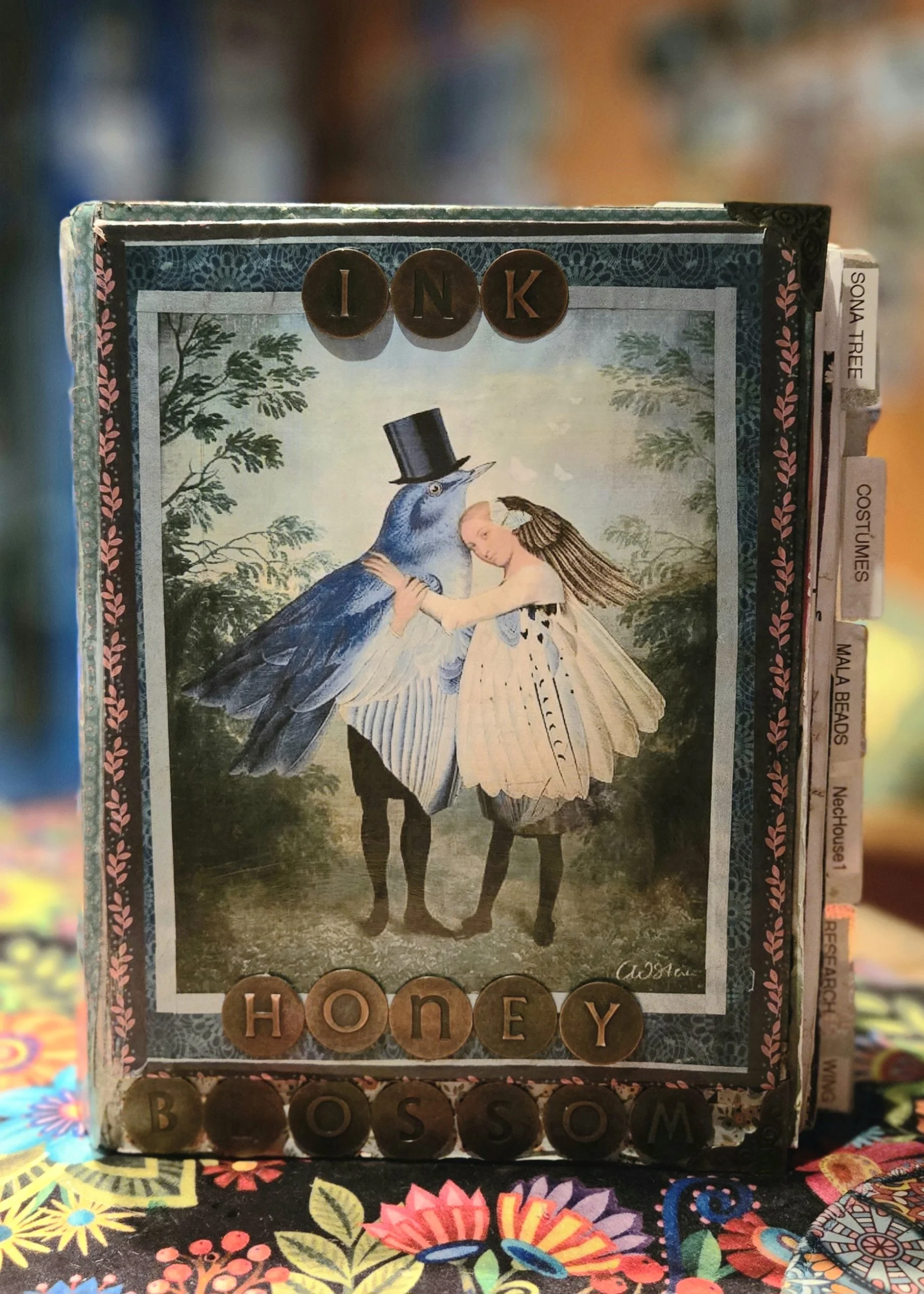
Cover of “The Bible”
LL: I interviewed speech pathologists and speech therapists and people who specialise in speech differences. So, with Key, there are false starts, repaired utterances, cluttered speech,, and combining the beginning syllable of one word with the ending syllable of another. These are real diagnosed speech differences.
ES: I imagine that level of intentionality contributed to these choices being so successful.
Okay. Here are my last two questions.
What was the biggest surprise that Ink Honey Blossom had in store for you? And what was the biggest challenge in writing it?
LL: The biggest surprise was how much Ink took over and how much she took over what I wanted the story to be about.
Originally, I wanted the story to be about envy. I was reading Elena Ferrante, My Brilliant Friend. I did a deep dive into the feeling of envy, which gets a really bad rap.. Malicious envy is what we think of when we think about envy, but envy is part of our emotional evolution, I can help us strive and teach us what things are important to us.
So I originally set out to write a book with envy as a major theme. But as the world of the characters got smaller and smaller, the things they had to covet got harder and harder to come by.
Then Ink took over and said, "Nope. It's going to be about betrayal."
I said, "But look at all this research I've done on envy."
And she said, "Yeah, that's really great, but no."
She said, "This is what we're going to write about. This is Ink's major trauma. Not even that she's locked up in here. That's it."
That's what she wanted. So that was the biggest surprise.
ES: And what was the biggest challenge?
LL: How do I get the beads from one place to another?
[Both laugh]
How do I make it believable that these people can have a conversation across a courtyard and not get caught?
There are strengths and weaknesses to any piece. Eventually you just have to trust your reader and stay humble when you are called out. If someone says, "It's kind of hard to believe that they had all these conversations and got away with all this." I humbly accept that and think “You're right. Thank you for suspending disbelief for as long as you did and letting the girls have their adventure.” I would also love to hear ideas on how they would have worked around this.
ES: Are there any other big ideas you wanted to write about ?
LL: The idea of moral injury was also a big one: Who do you help? Who do you save? Who is worthy of a better life? Who is special enough to be saved?
If Ink said, "Yes, you're allowed to stay on the Top Floor," the Girl will have a terrible life, but at least it'll be longer and better than a bleak existence on the First Floor. So Ink has to make decisions about who gets to suffer less and who must be sacrificed.
Soldiers, first responders, and healthcare workers have to make these hard decisions in times of crises and when there are limited resources, like during COVID.
I have a lot of compassion for the damage that creates inside people's psyches. I wanted to highlight the concept of moral injury and how damaging that can be to a psyche, a psyche that wants to do good, essentially, but it's impossible to do good for everyone all the time, no matter how much you want to.